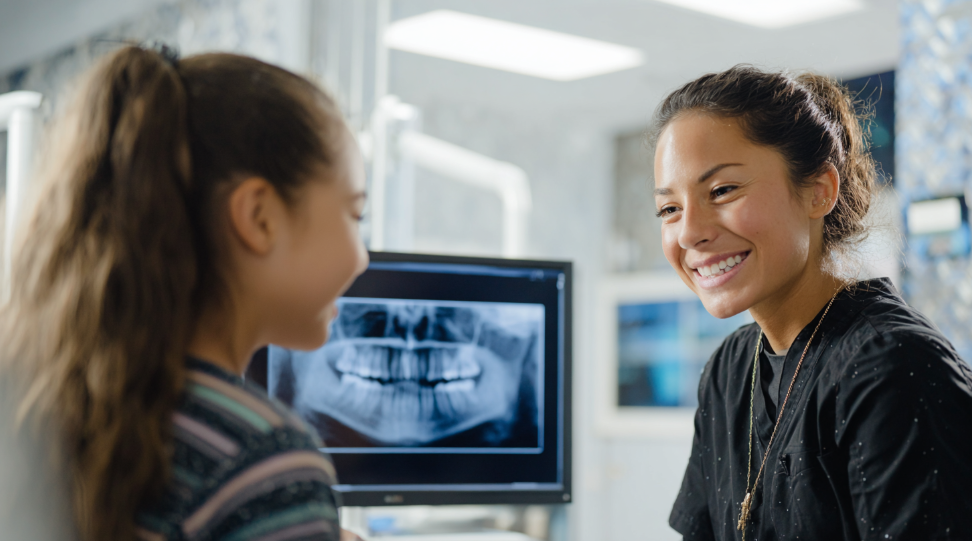
When we talk about health disparities in Indian Country, the conversation usually centers on the conditions that make headlines — diabetes, heart disease, behavioral health, the chronic underfunding of the systems meant to address them. Oral health tends to sit at the margins of that discussion, treated as a quality-of-life concern rather than a health priority. And within oral health, orthodontic care — the straightening of teeth and correction of bites — is often pushed even further to the edge, dismissed as cosmetic. That framing deserves a second look, because the gap in this area is wide, it tracks the same lines as other disparities, and it carries consequences that are anything but cosmetic.
The reframing matters because the field itself has changed. What was once a slow, conspicuous, and expensive process has become something more precise, more efficient, and more adaptable to the realities of rural and underserved communities. Understanding what modern orthodontics can actually do — and who currently has access to it — is a useful lens on how unevenly the benefits of dental progress are distributed.
Why alignment is a health issue, not a vanity one
The “cosmetic” label is the first thing worth dismantling. Misaligned teeth and bites aren’t merely a matter of appearance. Crowded teeth are far harder to clean, trapping plaque in places a toothbrush can’t reach, which raises the risk of decay and gum disease — conditions already more prevalent in many Native communities. A poor bite can cause uneven wear, jaw strain, difficulty chewing, and speech issues. Left unaddressed in childhood, these problems compound into adulthood and become more expensive and complex to fix.
There’s a documented link between oral health and overall health, too. Chronic gum disease is associated with diabetes and cardiovascular disease — the very conditions that already burden Indian Country disproportionately. Oral care, including alignment, isn’t a separate luxury track. It’s part of the same web of health that everything else sits in.
Where the gap comes from
The barriers to orthodontic care in Native communities are familiar, because they mirror the barriers to nearly all specialty care.
Coverage
The Indian Health Service is chronically underfunded, and orthodontic treatment is frequently classified as elective — meaning it often falls outside what’s covered, even when it has clear functional benefits. Families are left to pay out of pocket for something positioned as optional.
Geography
Orthodontic specialists cluster in cities and suburbs. For families on rural reservations, the nearest provider can be hours away, turning a series of routine visits into a logistical and financial ordeal involving travel, time off work, and childcare.
Workforce
There is a persistent shortage of dental and orthodontic providers willing to practice in or travel to underserved areas, and very few Native providers in the specialty — a representation gap that affects trust and continuity of care.
The result is predictable: orthodontic treatment becomes something available to those with the means and proximity to pursue it privately, and out of reach for those without — the textbook definition of a health equity problem.
How the technology changes what’s possible
Here’s where the evolution of the field becomes relevant to access, not just outcomes. Several advances have lowered the practical barriers that used to make care especially hard to deliver at a distance:
- Digital scanning has replaced messy physical molds with quick intraoral scans that can be captured and shared electronically — a meaningful advantage for any model of care that involves a traveling clinician or coordination between sites.
- Clear aligner systems can require fewer in-person adjustment visits than traditional braces, which matters enormously when each visit means a long drive.
- Teledentistry and remote monitoring allow some progress checks to happen without an in-person trip, extending a specialist’s reach into communities they couldn’t otherwise serve regularly.
- Better treatment planning software makes timelines and costs more predictable, which helps families and clinics plan around real constraints.
None of this erases the structural problems of funding and workforce. But it does mean that the technical obstacles to delivering quality care in rural and remote settings are smaller than they were a decade ago. The tools to narrow the gap exist; the question is whether the systems and resources will be directed toward using them.
What a more equitable approach could look like
Closing the gap isn’t only a matter of technology — it’s a matter of priorities. A more equitable model would start by reconsidering the reflexive “cosmetic” classification that keeps functional orthodontic needs from being covered. It would invest in mobile and tribal-based dental programs that bring specialists into communities rather than requiring families to travel out of them. It would support pipeline programs that bring more Native students into dental and orthodontic professions, building a workforce with roots in the communities it serves. And it would integrate oral health, including alignment, into the broader health conversation rather than treating it as an afterthought.
Some tribal health programs are already moving in these directions, expanding dental services and partnering with providers to extend specialty care. Those efforts deserve more attention and more resources, because they’re proof the gap is closeable.
The childhood window, and why early access matters most
The equity stakes are sharpest in childhood, because that’s when orthodontic care does the most with the least. Catching a developing bite problem early — sometimes with simple, less invasive interventions — can prevent the kind of complex, costly correction that’s needed if the same issue is left until adulthood. A child who gets timely care and one who doesn’t can end up on very different trajectories from the same starting point, purely because of what their family could access and afford.
That makes the coverage gap especially consequential for Native youth. When functional orthodontic needs go unaddressed during the years they’re most treatable, the problem doesn’t disappear — it hardens into an adult condition that’s harder to fix, more expensive, and more likely to carry health consequences along the way. Early screening, ideally folded into the dental care kids already receive, is one of the highest-leverage places to intervene. It’s also one of the most achievable, since it leans on the pediatric dental infrastructure that already exists in many communities rather than requiring something built from scratch.
None of this is an argument that straightening teeth should leap ahead of more urgent health needs. It’s an argument that it belongs in the conversation at all — that “elective” is the wrong word for care that, delivered at the right time, prevents worse and costlier problems later. Naming it as part of the continuum of children’s health, rather than a cosmetic extra, is the first step toward funding it that way.
Part of the whole picture
Health equity means that the benefits of medical progress reach everyone, not just those who can afford proximity and private payment. As orthodontic care has grown more capable and more deliverable, the fact that it remains so unevenly distributed is a quiet example of how disparities persist even as the underlying medicine improves. Bringing it into the broader conversation about health in Native communities — naming it as the functional health concern it is — is a small but real step toward making sure progress doesn’t stop at the edge of the reservation.