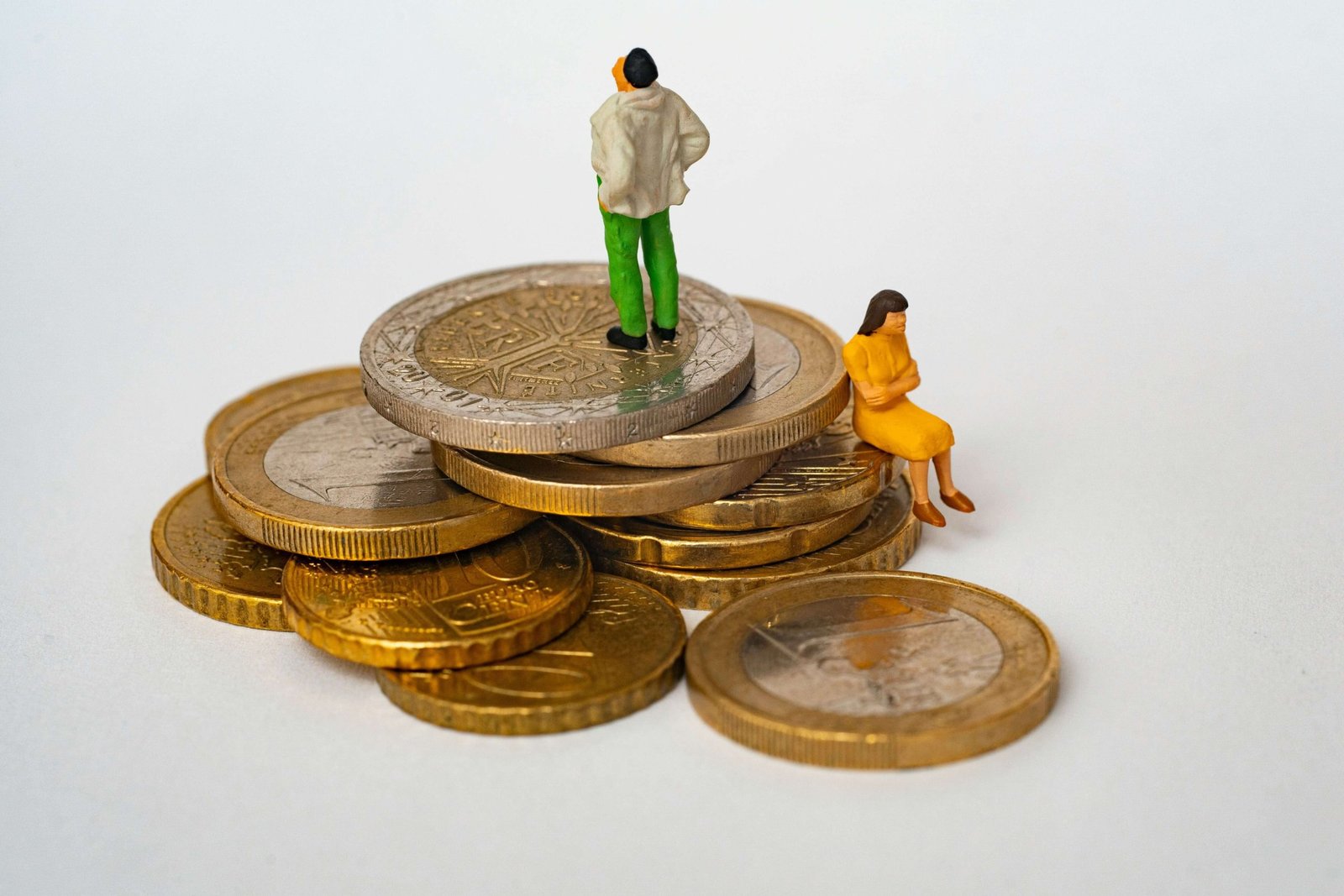
It might seem like a casino is a great place to earn extra money. After all, with a little luck, you can multiply your “invested” money many times over. However, almost all forms of gambling have built-in mechanisms that prevent consistent winning.
Positive, Negative, and Zero-Sum Games
A payout is the money a casino or bookmaker hands back the moment your bet wins. That’s the short version of what does payout mean in betting. It gets more interesting once real cash sits on the table. Play live dealer tables at a live casino Australia and you’ll watch it happen in real time, the screen showing your full return the instant a round settles, stake included, so the payout meaning stops being abstract and starts being a number you can read.
Games can be divided into:
- positive-sum;
- negative-sum;
- zero-sum games.
In a positive-sum game, the sum of the players’ payoffs is greater than zero. In a zero-sum game, it is zero. In a negative-sum game, it is less than zero. We can also put it another way. In a positive-sum game, players get back more than they put into the system. In a zero-sum game, they get back what they put in, but only that. In a negative-sum game, they get less. But be careful: this doesn’t mean the distribution is fair. Only the sum of the payouts counts.
It’s important to remember that you can lose money in a positive-sum game, and you can win in a negative-sum game. However, it doesn’t take a genius to figure out that it’s much easier to make money in a positive-sum game. The rules of all gambling games, however, make them classic negative-sum games.
Playing Against the Casino
In most classic gambling games, we play against the organizer, the casino. This is the worst possible option, mainly because the organizer has a whole host of tricks at their disposal to put players at a disadvantage. But let’s leave aside the legal and semi-legal tricks of casinos. Therefore, all gambling games have a built-in mechanism that generates profits for the organizer in the long run. We can think of them as their commission.
Let’s start with the game most associated with Hollywood casinos: roulette. Roulette has 37 (European) or 38 (American) numbers to bet on. The European version has a single zero, the American version a zero and a double zero. This makes the European version more advantageous for players.
The payout for the basic roulette bet, betting on the correct number, is 36 times the stake (for a $1 bet, you get $1 back plus a $35 prize). So does payout include wager? Yes — the full return contains both your original stake and the prize on top. However, the probability of a given number being rolled in roulette is 1:37 (EUR) or 1:38 (US). If roulette were a zero-sum game, the payout would be 37 or 38 times. The gap of 2.7% in European roulette and 5.26% in American roulette is the house’s commission. In roulette, you can also bet on different combinations, but the mathematical effect is the same: the same commission goes to the house.
This doesn’t mean you can’t win at roulette. You can. It’s just that in the long run, the game is rigged against you.
Interestingly, there’s a mathematical model that guarantees a win in roulette. We choose one type of field: even or odd (importantly, zero isn’t treated as either). We bet only on them, each time doubling the previous stake: $1 on the first bet, $2 on the second, $4 on the third, $8 on the fourth, and so on. A win pays out twice the stake, allowing us to cover all previous losses and still make a profit. The theory is beautiful, but in practice there are two drawbacks. First, the probability isn’t 50%, but 2.7 or 5.26 percentage points less. Second, the stakes increase rapidly due to exponential growth, and after several losses in a row the required bet may exceed what you have available.
Other Games, Same Commission
A similar commission mechanism can be found in other casino games. In slot machines, the house commission, the difference between the payout amount and the probability of winning, is approximately 5–10%, but can be even higher depending on the specific machine’s settings.
A rather interesting example is blackjack, a version of playing 21 against the house. Although the house edge is typically a few percent, the use of mathematical models can reduce it to around 0.5%, and in some cases (through card counting) even tip the scales to 2% in the player’s favor. Card counting is a legal strategy, but if the casino realizes a player is using it, they will usually remove them from the blackjack table, and sometimes from the casino altogether.
Not only are the games mathematically skewed in favor of the house, but the organizer also has a whole host of tricks at their disposal to increase their advantage over the player. These tricks may provide short-term winnings, but they’re impossible to turn into a regular source of income.
Playing Against Other Players
Some gambling games involve playing against other players. Among them, poker is the most popular.
Poker remains a negative-sum game. The casino takes a rake. In tournaments, it’s typically 10% of the buy-in. The World Series of Poker main event (the unofficial world championship) currently has a buy-in of $10,000. In traditional cash play, it’s typically 5–10% of each pot.
The fact that the game isn’t lopsided in favor of any single player means that poker can be a regular source of income. In fact, there are professional poker players who do just that. However, this doesn’t mean that poker is easy to win or that it’s a good source of additional income.
Professional poker players practice for several to a dozen hours a day. This game requires nerves of steel and lightning-fast calculation of winning probabilities. A beginner simply becomes a victim to be quickly fleeced by the professionals.
The Takeaway
The math is set before you sit down. Understanding bet payouts and house commissions won’t change the odds in your favor. It just means fewer surprises when the session ends. Play for the experience and treat any win as a bonus rather than a plan.