
Listen to this article
Estimated 4 minutes
The audio version of this article is generated by AI-based technology. Mispronunciations can occur. We are working with our partners to continually review and improve the results.
U.S. President Donald Trump is curious about why Iran has not yet “capitulated” and agreed to curb its nuclear program, as Washington builds up its military capability in the Middle East, Trump’s special envoy, Steve Witkoff, said.
“I don’t want to use the word ‘frustrated,’ because he understands he has plenty of alternatives, but he’s curious as to why they haven’t … I don’t want to use the word ‘capitulated,’ but why they haven’t capitulated,” Witkoff said in an interview on Fox News on Saturday.
“Why, under this pressure, with the amount of sea power and naval power over there, why haven’t they come to us and said, ‘We profess we don’t want a weapon, so here’s what we’re prepared to do’? And yet it’s sort of hard to get them to that place.”
Trump has ordered a huge buildup of forces in the Middle East and preparations for a potential multi-week air attack on Iran. Iran has threatened to strike U.S. bases if it is attacked.
The United States wants Iran to give up enriched uranium, which Washington says can potentially be used to make a bomb, as well as stop supporting militants in the Middle East and accept limits to its missile program.

U.S. President Donald Trump has warned Iran to agree to a nuclear deal within 15 days ‘or it’s going to be unfortunate for them,’ while Iran and its ally Russia hold joint naval exercises in the region.
Tehran says its nuclear program is peaceful, but it is willing to accept some curbs on it in return for the lifting of financial sanctions. It rejects tying this to other issues, such as missiles and support for armed groups.
“They’ve been enriching well beyond the number that you need for civil nuclear. It’s up to 60 per per cent [fissile purity],” Witkoff said. “They’re probably a week away from having industrial, industrial-grade bomb-making material, and that’s really dangerous.”
A senior Iranian official told Reuters on Sunday that Iran and the United States still have differing views over sanctions relief in talks.
Witkoff also said he has met at Trump’s direction with Iranian opposition figure Reza Pahlavi, son of the shah ousted in Iran’s 1979 Islamic Revolution. He did not provide further details of the meeting.
Pahlavi, who lives in exile, served as a rallying figure for some of Iran’s opposition during anti-government demonstrations last month in which thousands of people are believed to have been killed, the worst domestic unrest since the revolution era.
Earlier in February, Pahlavi said U.S. military intervention in Iran could save lives, and he urged Washington not to spend too long negotiating with Tehran’s clerical rulers on a nuclear deal.
Iranian students begin new term with protests
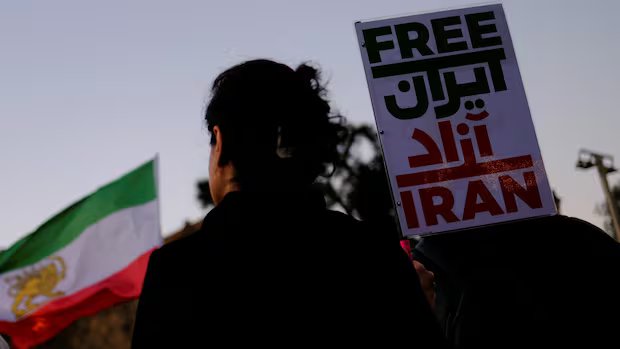
Meanwhile, students held protests at several Iranian universities at the start of a new semester on Saturday, some clashing with pro-government groups, according to local news agencies and posts on social media.
The protests coincided with ceremonies traditionally held after 40 days to mourn those killed by security forces during last month’s anti-government demonstrations, which saw thousands lose their lives in the worst domestic unrest since Iran’s 1979 Islamic Revolution.
A video purportedly showed rows of marchers at Tehran’s Sharif University of Technology condemning Supreme Leader Ayatollah Ali Khamenei as a “murderous leader” and calling for Reza Pahlavi, the exiled son of Iran’s toppled shah, to be a new monarch.

State-affiliated news agencies such as SNN carried videos of clashes, with protesters allegedly injuring volunteer student Basij militia by throwing rocks at Iran’s top engineering university. Pro-government Basij members often assist security forces in quelling protests.
Protests were also held in Beheshti and Amir Kabir universities in the capital Tehran, as well as Mashhad University in the northeast, according to videos published by rights group HAALVSH, which Reuters could not verify.
In the western town of Abdanan, a hot spot for protests, demonstrators chanted “Death to Khamenei” and “Death to the dictator” after the arrest of an activist teacher, according to rights group Hengaw and social media posts.