The Current22:32Who gets to live in Mexico City?
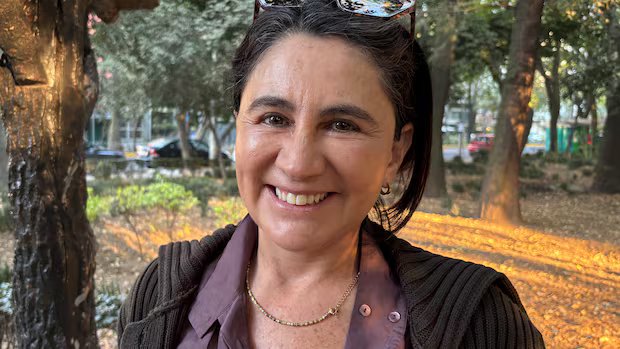
Walking around the leafy La Condesa neighbourhood in Mexico City, Maria Moreno Carranco is worried that an influx of digital nomads is driving up prices — and could eventually force her out.
“The last five years, the change has been really astonishing,” said Moreno Carranco, an urban studies professor who has lived in La Condesa for more than 20 years.
“Everything is crazy expensive for us with Mexican salaries. And the rents are just skyrocketing,” she told The Current.
La Condesa and other central neighbourhoods became a destination for remote workers — also known as digital nomads — in the pandemic, particularly after the city signed a 2022 deal with Airbnb to attract them.
Critics say that deal helped to fuel rising rents. Data from September shows La Condesa saw a 17 per cent increase from April 2023 to April 2025; while there was a 98 per cent rise across the neighbouring borough of Miguel Hidalgo in the same period.

The change is more than just financial. Moreno Carranco says when she goes to a local restaurant these days, servers greet her in English.
She points out, en español, that she’s a local.
“It is, in a way, sad that they assume that the clientele will be foreigners and that no Mexicans go there anymore,” she said.
Many nomads ‘live in a bubble’
With many locals feeling priced out or less at home in their own neighbourhoods, anti-gentrification protests broke out across the city last summer. While largely peaceful, some businesses were vandalized, with windows broken and graffiti demanding “Gringo go home.”
Canadian Tracie LeBlanc fell in love with Mexico City on a short trip three years ago. When she was laid off from her job in Toronto last May, she decided to make the move south, and now lives in La Condesa, from where she operates a business based in Canada.
She’s mindful of the tensions around digital nomads, often discussing it with Mexican friends.
“This is something I struggled with so much as someone who works in social justice. Am I creating harm in being here?” said LeBlanc, a marketing and communications consultant.
The city’s government website still directly appeals to remote workers, boasting that “Mexico City is, hands-down, more affordable in terms of housing, utilities, necessities, and food” than other North American cities.
I shop local. I support the economy. I only speak Spanish.– Tracie LeBlanc, digital nomad
But LeBlanc says finances were not her main motivator for moving to Mexico City. Her monthly rent was $2,500 Cdn in Toronto, and is $1,700 Cdn now. While she notes it is “relatively cheaper,” she was more enticed by the city’s sense of community.
“The Mexican people are so kind and generous and warm and open … everyone comes together and you feel really part of something special.”
She says she strives to embrace the city’s culture.
“I shop local. I support the economy. I only speak Spanish,” she said.
Mia Glanz, a fellow Canadian who is studying art in Mexico City, says many remote workers often “live in a bubble” of other nomads.
“The government wants to attract those kind of people because they’re bringing foreign dollars or money to invest in Mexico, but it doesn’t spread evenly,” she said.

Some local businesses thriving
Just east of La Condesa, Jose Olivas is co-owner of Form + Matter, a high-end cocktail bar in Roma Norte. He says visitors and newcomers are helping businesses like his thrive.
“It allows all of us to have a chance to get a piece of the cake and employ others and make money,” said Olivas, who grew up in Mexico and lived in Vancouver for a decade as an adult, before moving back in 2020.
Olivas adds that increased international visitors have led to better street lighting and more security, making the area feel safer. But he acknowledges that his cocktail menu doesn’t necessarily cater to locals.
“I wouldn’t say we are a cheap cocktail bar for Mexicans, at least not for medium- or lower-class Mexicans.”

Glanz says even with high prices, many of these new businesses are appealing to locals.
“I don’t think everyone is so angry about it. A lot of people are happy that they can get these things that weren’t available before,” she said.
‘The strength to resist’
Anti-gentrification activist Sergio Montes and his family have lived in Escandón, just south of La Condesa, since the mid-90s.
He says the traditionally working-class neighbourhood is now feeling the pressure of gentrification, in particular from developers buying older buildings made up of larger family apartments, and evicting tenants to make way for smaller units that can host short-stay rentals.
“We hope that we have the strength to resist. We want to remain here, we have the right to remain. But you get depressed,” he said.
Montes says he’s engaged with government officials, but they tend to downplay or dismiss his community’s concerns. He thinks very little has been done, in part because the city has been focused on co-hosting this summer’s World Cup.

Last summer, Mexico City Mayor Clara Brugada unveiled a 14-point plan, including proposals to regulate both rental prices and short-term rental properties, and curb community displacement.
The Current contacted the city to ask what progress has been made, but did not receive a response.
‘A gringo doesn’t want to pay more rent’
Back in La Condesa, Moreno Carranco thinks tourism and digital nomadry are too concentrated in central neighbourhoods — and her neighbours don’t want any more new hotels or Airbnbs.
There are 26,294 Airbnb listings in the city, according to the advocacy organization Inside Airbnb. Almost half are concentrated in Cuauhtémoc, the borough which includes La Condesa and Roma.
Last year, a research study noted a 67 per cent increase in the number of Airbnb listings in La Condesa between 2019 and 2023, from 659 to 1,100. The study, published in the peer-reviewed journal EURE in January 2025, noted an increase of 74 per cent across La Condesa and neighbouring Roma Norte, Roma Sur and Hipódromo.
In a statement to The Current, Airbnb said short-term rentals make up only a small share of the city’s housing stock. (The city has just over 2.75 million inhabited private households, according to data from the National Institute of Statistics and Geography.)
“Housing pressures in Mexico City predate the pandemic and the rise of remote work, and are primarily linked to long-term housing supply constraints, zoning challenges, and urban growth,” the statement said. It added that rates are set by local hosts.

Many Canadians are struggling to find housing, but are short-term rentals part of the problem? The National brings together landlords who have turned to Airbnb and long-term renters who feel like they’re being crushed by soaring rent prices and the shrinking availability of rental properties.
The company also said it created approximately $1.7 billion Cdn in economic impact in Mexico City in 2024.
John Goodrich is a Canadian actor who has been living in Mexico City since 2018. Since moving to the city, he married a Mexican woman and became stepfather to their kids. He speaks Spanish, works and pays taxes, and has become a permanent resident.
He disagrees that rising rents are solely the fault of people moving from other countries and says he faced a substantial rent hike himself. Last year he was living in Roma Sur, paying 21,000 pesos a month ($1,660 Cdn). He left when the condo’s Mexican owner increased the rent to 40,000 pesos ($3,162 Cdn).
“A gringo doesn’t want to pay more rent, it’s the responsibility of the owners, the house owners themselves,” he said.

When Moreno Carranco’s eldest son recently moved abroad to study, she decided to downsize from the apartment she owns and rent instead. But she realized she could only afford to stay in La Condesa by renting her old place “to an American guy who is paying a lot of money.”
Otherwise, she would be priced out of the neighbourhood she loves.
“I am part of the problem, definitely … [but] I’m also part of the affected people.”