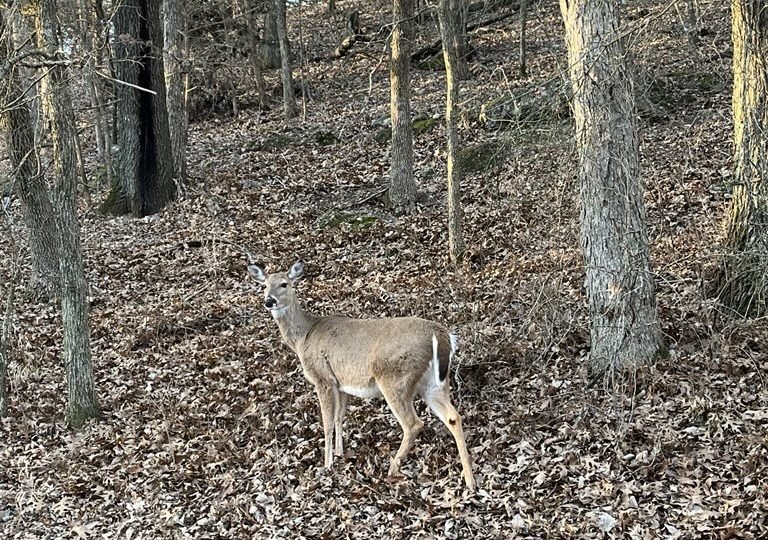
Every good hunting story describes a person overcoming memorable adversity to achieve a goal — it can be bad weather, rough terrain or faulty equipment.
Kodie Shepard’s 2025 hunting season story is testimony in a federal lawsuit filed by the Cherokee, Chickasaw and Choctaw Nations that will settle a sovereignty dispute ignited by Oklahoma Gov. Kevin Stitt that has impacted the state’s post-McGirt judicial landscape.
This week, the Oklahoma Supreme Court ruled that the outcome from that lawsuit should settle whether Stitt can send the Oklahoma Department of Wildlife Conservation to enforce hunting and fishing regulations within tribal jurisdictions against tribal citizens.
In his testimony, Shephard said last year, on Oct. 27, he was approached by a state game warden who denied his Chickasaw Nation hunting license and issued two citations, one for hunting without an Oklahoma state license and one for hunting deer without a state deer tag, which totaled $513. He was cited at the Chickasaw Recreation Area, one of his favorite hunting spots, because it’s a quick drive from his family home in the Chickasaw Nation and connected to his tribe’s cultural land practices.
Shephard is one of several tribal citizens who testified how the enforcement directive caused harm during the one-month operation before the state’s attorney general ordered it to stop.
“Hunting is more than a recreational activity for me, since I primarily hunt for subsistence purposes,” Shepard said in court documents. “My family and I consume the deer that I take each fall. With four other mouths to feed in the household, I depend on deer hunting for an affordable and healthy food source.”
Choctaw Nation Chief Gary Batton praised this week’s Supreme Court ruling as an, “important confirmation of our tribal sovereignty. It has always been clear that tribal members have a right to hunt and fish on tribal land. We appreciate the Justices for clearly signaling these principles still hold.”
Chief of the Seminole Nation of Oklahoma Sena Davis-Yessleth called the ruling a “huge win for the Five Civilized Tribes.” This group includes the Cherokee, Chickasaw, Choctaw, Muscogee, and Seminole Nations, which have steered the tribal response to support tribal hunting, fishing, trapping and gathering rights and entered agreements to support neighboring tribes.
Their work is critical to tribal jurisdiction over hunting and fishing rights in the ongoing dispute with Stitt, and are paramount to any land management resolutions or agreements between the state of Oklahoma, the federal government and other tribes.
For instance, it designed and implemented the Five Tribe Wildlife Reciprocity Agreement for guidelines to instruct tribal hunters on tribal lands. It was expanded in 2024 to enable tribal members with licenses issued through their tribe the ability to hunt and fish on each of the participating tribes’ reservations.
“Our inherent right to hunt and fish on our tribally owned lands is not for the State to tell us otherwise,” Davis-Yessleth said.
The tribes assert that their working relationships with the United States government on hunting rights, such as how permits are issued, is demonstrated under Treaty law that makes Stitt’s code enforcement unnecessary, and ultimately harmful.
“Our people have possessed longstanding hunting and fishing rights upon these lands, rights forever guaranteed by our treaties with the U.S. government and deeply woven into our tribal laws,” Cherokee Nation Principal Chief Chuck Hoskin Jr. said after the supreme court ruling.
Longstanding federal Treaty law has worked in favor of the tribes to gather support from Oklahoma Attorney General Gentner Drummond, who sided Tribes after the Supreme Court decision.
“This ruling is another rejection of Gov. Stitt’s unlawful campaign against tribal citizens exercising their long-held rights,” Drummond said. “The Court would not be used as a tool to override settled federal law and decades of cooperative wildlife management. My position has never wavered: federal law is clear, and it is my duty to uphold it.”
In an opinion issued from the governor’s request last December, the attorney general cited two federal legal opinions that support the tribes’ claims over Oklahoma. In the case White Mountain Apache Tribe v. Bracker, 448 U.S. 136 (1980), he cited against the state’s additional license fees, “it is clear that the state does not have authority to enforce the Wildlife Code on a Member Indian who seeks to harvest game on the land the federal government promised to his or her tribe.”
According to Stitt’s office, the Oklahoma Department of Wildlife Conservation generated approximately $28 million in gross revenue from sales of hunting and fishing licenses and related activities, matched by another $28 million in federal grant reimbursements during the fiscal year 2025.
Drummond cited New Mexico v. Mescalero Apache Tribe, 462 U.S. 324 (1983) as support for the legal framework tied to tribal wildlife management practices, including the collection of fees for hunting and fishing licenses administered by tribal offices.
Drummond concluded, “Wildlife management by tribes over Indians on tribal lands is a core exercise of that inherent sovereignty. And, after all, section one of the Oklahoma Enabling Act sets forth the federal interest in maintaining “federal and tribal jurisdiction over ‘Indians, their lands, [and] property’, except as extinguished by the tribes or the federal—not state—government.”
Alongside the legal framework to establish tribal sovereignty, the issues with Stitt’s enforcement last year also impacted cultural practices around hunting season harvests. This is clear in the testimony from Shepard and the other Native hunters in the federal lawsuit against Oklahoma’s enforcement.
Last year, before October’s archery hunting season started in Oklahoma, Shepard bought a new freezer he wanted to fill with deer meat harvested from hunts he planned around the Chickasaw Nation. After the citations, which were eventually dismissed, he said that he avoided hunts on public or tribal lands due to the state game warden policies.
“This has made hunting a less enjoyable experience, one that is less connected to my Chickasaw heritage,” he said. “Where I hunt on private land, there are fences and corn feeders already set up, so the deer gather in predictable areas and are much easier to take.”
Shepard eventually filled his new freezer and made it clear in his testimony how Stitt’s short-lived policy impacted his hunting season.
“I prefer hunting on public lands, like the Chickasaw National Recreation Area where I was cited, because it is a more exciting and challenging experience. There, without the aid of corn and cameras, I would track deer using their trails or their scrapes left behind on trees and then walk for miles through the land to find a deer to take,” Shepard said in testimony under review by a federal judge. “Not only is this method of hunting more fulfilling, but it is also a way that I connect with my Chickasaw heritage since it more closely resembles how my Chickasaw ancestors would hunt.”