It’s been a little more than a year since the fall of Bashar al-Assad in Syria ended a 14-year civil war that claimed hundreds of thousands of lives and decimated the country.
More than 1.3 million Syrians have returned home since then, according to the UN refugee agency, primarily from neighbouring countries such as Turkey, Lebanon, Jordan, Iraq and Egypt — but also from as far away as Canada.
For many, the fall of Assad opened what felt like a narrow window — a chance to walk familiar streets, revisit the places of their memories and test whether returning home was still possible.
We talked to four Syrian Canadians who made the journey.
Going back for good
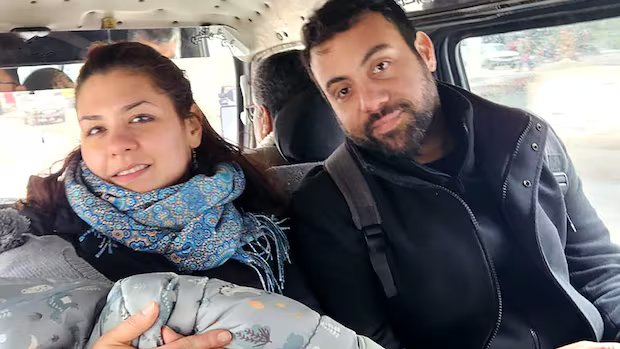
Muzna Dureid, 36, and Mustafa Alio, 42, crossed from Jordan into Nasib, Syria, with their one-year-old son at the end of December 2024, part of a convoy of vehicles that made its way through abandoned checkpoints that once inspired fear.
“It was like a dream — very emotional,” Alio said. “All of us were just basically crying, [amazed] we can go in and we’re free.”
Alio first came to Canada as a student in 2007. He last returned to Syria in 2010, before a blog post he wrote supporting the early protest movement drew backlash from former friends who supported the Assad regime. Because Alio is from Latakia, a coastal city with close ties to the regime, the situation felt risky at the time. He stayed away.
His first stop upon returning to Latakia 14 years later was the grave of his father, who died in 2017, shortly before the visa paperwork that would have allowed him to join Alio, Alio’s mother, two sisters and nephew in Canada came through.
“It was the first time I got the chance to sit down and be with him for like half an hour,” Alio said of visiting the grave. “I just tried to say whatever I wanted to say.”
As Alio walked the streets of Latakia, trying to reconcile memory with reality, what struck him most was how little had changed.

Latakia wasn’t destroyed like other major Syrian cities, as it was protected by elite military forces. But years of war and neglect had taken a different toll. The athletic club where Alio had played basketball felt frozen in time, he said.
“The ground, the baskets, the structure, it was exactly the same as I left it almost 20 years ago, without any maintenance. It was pretty sad to see.”
‘Literally gone’
For Dureid, the reality of returning home also took time to sink in.
“It was so hard to believe that Assad is gone,” she said. “And now, I have the opportunity to enter the country without jeopardizing my safety.”
She hadn’t returned since arriving in Canada in 2016.
Dureid was part of the opposition movement in Syria and lost an uncle, who was shot dead by Assad forces during a street demonstration in the early months of the 2011 uprising. The night before, he and Dureid had been preparing protest posters together, she said.

While many Syrians hesitated to return, Dureid feared missing the chance altogether.
She visited Al-Qadam, the southern Damascus neighbourhood where she grew up, even though her surviving relatives warned her against it. There were no buildings left standing, no services, not even cellphone reception, they told her.
She went anyway.
“I was trying to recognize the area — the location of our home — but it wasn’t easy,” she said. “I kept crying all the time.”
She spotted a piece of marble among the debris from what had once been her kitchen counter and some empty containers of Costco multivitamins — supplies she had sent to relatives during the war when food was scarce.
“It was so difficult for me to believe that people who had been there are gone,” she said.
Al-Qadam was one of several Damascus neighbourhoods besieged by Assad forces between 2013 and 2018, which cut off opposition-held areas from food and medical supplies.

U.S. President Donald Trump met with Syrian President Ahmed al-Sharaa, who once pledged allegiance to al-Qaeda and swept to power at the head of a group that Washington has called a terrorist organization, before a summit between the U.S. and Gulf Arab countries.
After several trips back, Dureid and Alio decided to leave the life they had built in Montreal and settle in Syria. Alio managed to keep his job in the refugee advocacy sector and works remotely, while Dureid is looking for work in Syria.
“The fall of the regime doesn’t mean that all the solutions just happened,” Dureid said. “It’s actually quite the opposite — now, it’s the time of rebuilding Syria.”
Their son speaks English and Arabic at his new daycare, but Dureid talks to him in French at home, a small way to maintain ties to Canada.
‘The horizon is open’
When Gamal Mansour, 53, and based in Toronto, left Syria more than a decade ago, he vowed never to return as long as the Assads remained in power.
He grew up first under the rule of Hafez al-Assad, then his son Bashar. His decision to leave wasn’t driven by a single event but by “the accumulation of a million paper cuts” of repression, fear and restrictions.
The final straw came when a former friend reported him to the security services after he discussed organizing humanitarian aid for opposition-held areas under siege.
Once Assad fell, Mansour — who by then was a PhD candidate in political science at the University of Toronto — was on his way back to his home city of Damascus within days.

He witnessed scenes of celebration and saw posters of Hafez and Bashar al-Assad that once loomed large ripped down and trampled underfoot.
“To be able to walk into the streets of Damascus and not have to contend with his [Assad’s] presence … was just a breath of fresh air. It was reinvigorating. It was empowering.”
But he was also confronted by the scale of destruction.
“Entire neighborhoods levelled to the ground, not a building standing,” Mansour said. “The level of destruction in physical capacity, but also in lives, in families, in social fabrics, in economics, is devastating. You start feeling the burden of that.”

When he first returned, the mood was euphoric, but when he came back months later, that had begun to fade.
“An incredibly destroyed infrastructure has now started to weigh on people’s minds, and they’re becoming nervous and agitated and want, you know, some improvement in their lives,” Mansour said.
Even when goods are available, he says, prices are exorbitant and salaries remain low, forcing many families to rely on money sent from relatives abroad.
One of the most sobering realizations, he said, was how difficult it would be to rebuild political life after generations of autocratic rule.
“We grew up in a stifled place, not even daring to dream,” he said. “And then for that to change — you realize the challenges.”
Mansour hasn’t resettled in Syria but returns regularly to teach and maintain ties within Syria’s policy, academic and governmental circles.
“I’m still hopeful,” he said. “The horizon is open.”
A hard decision
Amrou Nayal, 39, left Syria in 2009 and was unable to return for 16 years. His participation in anti-Assad protests at the Syrian embassy in Ottawa and fundraising to support vulnerable civilians in Syria put him on the government’s wanted list, he said.
He went back last year and noticed the change as soon as he landed in Damascus.
“What was known before as a place to get hassled by security forces, today, it is a place where you’re welcomed back home with open arms, smiles, people who are happy to see you come back.”
Elsewhere, the contrast was starker.
“When I left, it was a prosperous country. People had businesses; construction was thriving; manufacturing was thriving. Today, you go, there is nothing left to thrive. … everything is still in shambles.”
Nayal took a 360-killometre road trip from Damascus to Aleppo, stopping in Hama, Homs and Idlib to see the scale of the war’s impact.

“When you see the amount of destruction, you stand before it with respect to the lives that have been presented for the price of this freedom, and you’re filled with hope nonetheless.”
In Aleppo, he found little evidence of the city he remembered.
“You would walk into an area that you supposedly know — you can still see pictures of it in your brain, but walking there with zero landmarks left, it would be impossible to recognize where you are,” he said.
Most of his relatives and friends were long gone — dead or dispersed by war. In Aleppo, Nayal returned to his childhood home, which had been raided by Assad security forces and partially burned in 2016, as a neighbour watched.
“You still had glimpses of memories here and there — a place where you sat to study, a place where family gathered,” he said.
The bigger shock, he said, was when he visited the countryside outside Aleppo where his family had a cottage. “It was just a trace of memory, nothing more.”
Nayal says he hopes to one day return and use his expertise in statistics and economics to contribute to rebuilding Syria. But for now, his wife’s stable job and the needs of their five-year-old daughter keep him in Mississauga, Ont.
It’s a dilemma that’s familiar to immigrants everywhere: the desire to pass on a sense of belonging to the younger generation weighed against the difficulty of coming back to a country that’s still rebuilding.
“The sadness is the amount of destruction and the loss of opportunity to return,” Nayal said, as well as “the loss of life, the loss of memories or the opportunity to create more memories with your kids now.”