
Listen to this article
Estimated 5 minutes
The audio version of this article is generated by AI-based technology. Mispronunciations can occur. We are working with our partners to continually review and improve the results.
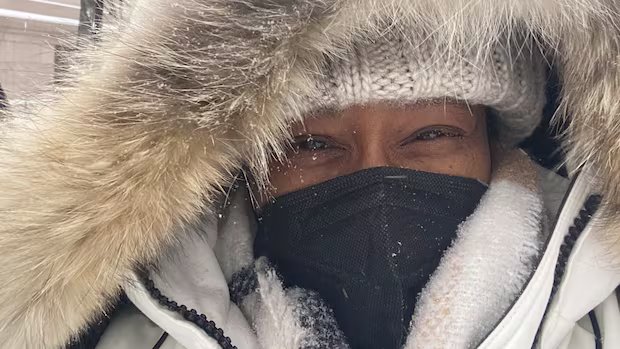
This First Person column is written by Rogene Reid, who lives in Toronto. For more information about First Person stories, see the FAQ.
The snow day email arrives before dawn, glowing softly on my phone.
Even after all these years, that early morning message still feels like a small miracle — a quiet signal that the city has agreed to pause. As a child, it felt like winning a secret lottery. As an adult and a school principal, the feeling hasn’t left me.
Snow days carry a tenderness that lives beneath the surface of winter. A reminder that rest can arrive unexpectedly and without permission.
Growing up, winter wasn’t romantic. It was heavy coats, wet socks, wind that made my eyes water and cars that needed scraping before they would co-operate. Winter was something to get through.
I come from people who carry sun in their bones, yet I grew up shaped by snow. In Jamaica, warmth was assumed and rain was something to feel rather than escape.
My Caribbean parents approached the cold with practicality. I was born in Canada, and they taught me how to survive winter, not how to love it. Warmth, for them, was home. Because of them and our travels back to their homeland, I often found myself nostalgic for Jamaican warmth — even in Toronto summers. Despite the similar temperatures, the air in Jamaica felt fresher.

Warmth was home to me, too. But winter shaped me quietly, steadily, until it became part of my identity as a Canadian, even as I was being raised by parents who carried a different climate in their bodies and memories.
I straddled two weather systems: the heat they carried in their memories and the snow that shaped mine.
At school, winter meant joy, snowmen at recess, cold‑kissed faces and boots clumped together near classroom doors. At home, winter meant caution: Be careful on the ice. Don’t stay out too long. Wear another layer. I learned early that winter held different meanings depending on who was experiencing it.
And yet, somewhere in between those meanings, winter quietly became mine.
I learned that preparation — the right layers, the slow walk across a slick sidewalk — was a form of care. I learned that early darkness could feel grounding rather than gloomy when paired with a warm light inside. I learned that quiet wasn’t emptiness but a kind of presence. Winter taught me to build routines that held steady even when the world outside did not.
Most importantly, winter taught me about pause.

Snow days, especially, felt like the city exhaled all at once. The usual urgency softened. Streets grew quieter. There was a shared understanding that for one day, life would move differently, slower, gentler. There was a sense of collective stillness, the kind that doesn’t ask to be earned.
As a child of immigrants, that stillness was complicated. Snow days could bring joy, but they also brought worry: missed shifts, longer commutes, more pressure on parents already balancing so much. Winter held both gift and burden. I learned to hold both.
But even with the complications, snow days carved out space for a different kind of belonging.
A belonging not based on ease, but on adaptation. Not on heritage, but on experience. Not on where my parents came from, but on where I was growing up.

Today, when snow falls in unpredictable bursts, sometimes too much, sometimes not enough, I feel a quiet grief for the winters that shaped me. I miss the rhythm they offered, the natural permission to slow down, the understanding that speed is not the only sign of progress.
When a snow day alert lights up my phone now, I feel something steady and familiar rise in me. Not excitement, exactly, but recognition. Winter has always asked me to pay attention — to my body, to my surroundings, to my pace, to what matters when everything else stops.
Winter, I’ve come to understand, is not something I simply lived through. It is a season that taught me who I am.
Do you have a compelling personal story that can bring understanding or help others? We want to hear from you. Here’s more info on how to pitch to us.
For more stories about the experiences of Black Canadians — from anti-Black racism to success stories within the Black community — check out Being Black in Canada, a CBC project Black Canadians can be proud of.