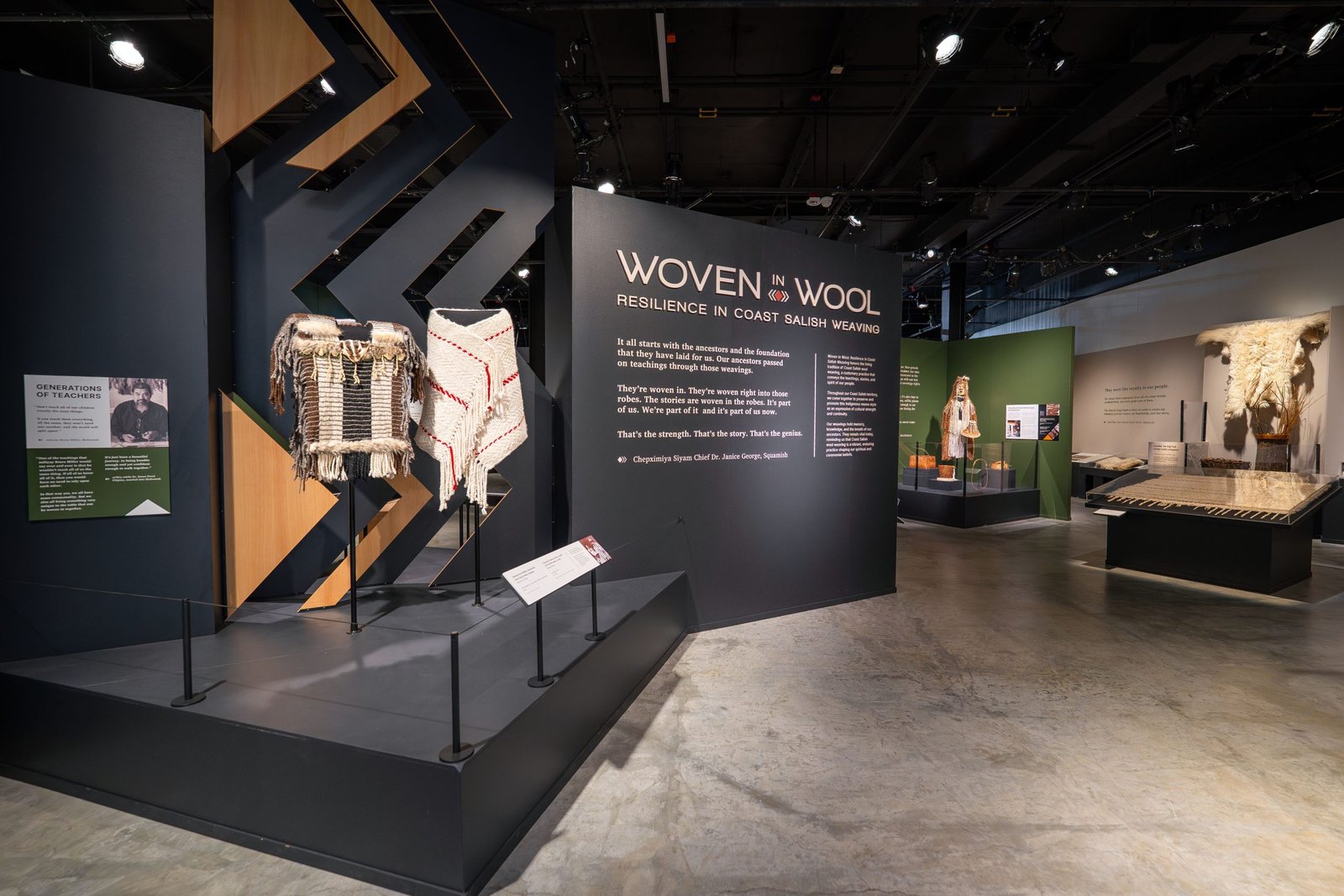
Woven in Wool: Resilience in Coast Salish Weaving is a special exhibition at the Burke Museum of Natural History and Culture in Seattle, Washington. The exhibit is a testament to the creativity and tenacity of Coast Salish weaving culture, a love letter to the plants, animals, and community that go into every weaving, and a touchstone for modern cultural-exhibition collaborations.
Running through August 30, 2026, Woven in Wool showcases historical and contemporary woven creations, including blankets, tunics, hoods, and skirts. Fourteen new creations were made by weavers from the Coast Salish Wool Weaving Center using mountain goat hair that took 10 years to gather.

The exhibition is the result of a multiple yearslong partnership between weavers from the Coast Salish Wool Weaving Center — whose idea it was — and the Burke Museum. Showcasing intricately designed weavings, the exhibit also brings to life the tools and materials used in their creation. Spindle whorls used to spin wool into yarn are on display, and visitors can try it themselves at one of several interactive spaces in the exhibit. Another section reveals common plants and fungi that weavers use to create the colorful dyes that enhance their creations.
Coast Salish weaving had all but disappeared due to colonial oppression intent on eradicating Native cultural tradition and expression. Today, Native weavers who learned the art from their elders are leading a resurgence in the craft and passing their knowledge to the next generation.
“This exhibition broadens the definition of American art by incorporating Indigenous voices and artistic practices historically marginalized due to biases against Native art and women’s work, both of which are often categorized as “craft” and left out of the story of “great art” in America.” – Katie-Bunn Marcuse, Burke Museum curator of Northwest Native Art
In addition to new weavings and carvings, belongings from the Burke’s collections as well as 30 loans from across Canada and the United States are also featured. As many of these weavings return to their home territory from museums across the United States and Canada, Coast Salish communities and museum guests have new access to items of artistic and cultural heritage, some for the first time.
One of those items is the pelt from the last known woolly dog, on loan from the Smithsonian Institution. Coast Salish tribes raised these special dogs, whose soft, white fur was once used for weaving. Like many other cultural practices lost or nearly lost to modern tribes, the woolly dog went extinct due to colonialism’s forced assimilation policies.
The Coast Salish Wool Weaving Center includes six weavers from across the Salish Sea who are committed to preserving and promoting the customary practices of Coast Salish wool weaving: Haʔməkʷitən Kelly Sullivan (Port Gamble S’Klallam), Chepximiya Siyam Chief Dr. Janice George (Squamish), SiSeeNaxAlt Gail White Eagle (Muckleshoot), Teeweewas Tillie Jones (Tulalip), sa’hLa mitSa Dr. Susan Pavel (Filipina married into Skokomish), and Qw3’May Usia Tahnee Hawk Miller (Skokomish).
“We share generational knowledge to sustain the sacred weaving that honors our ancestors. In this exhibit, we invite you to experience the joy, artistry, and teachings embodied in Coast Salish weaving.” — Coast Salish Wool Weaving Center weavers
Plan your visit at burkemuseum.org/woven.