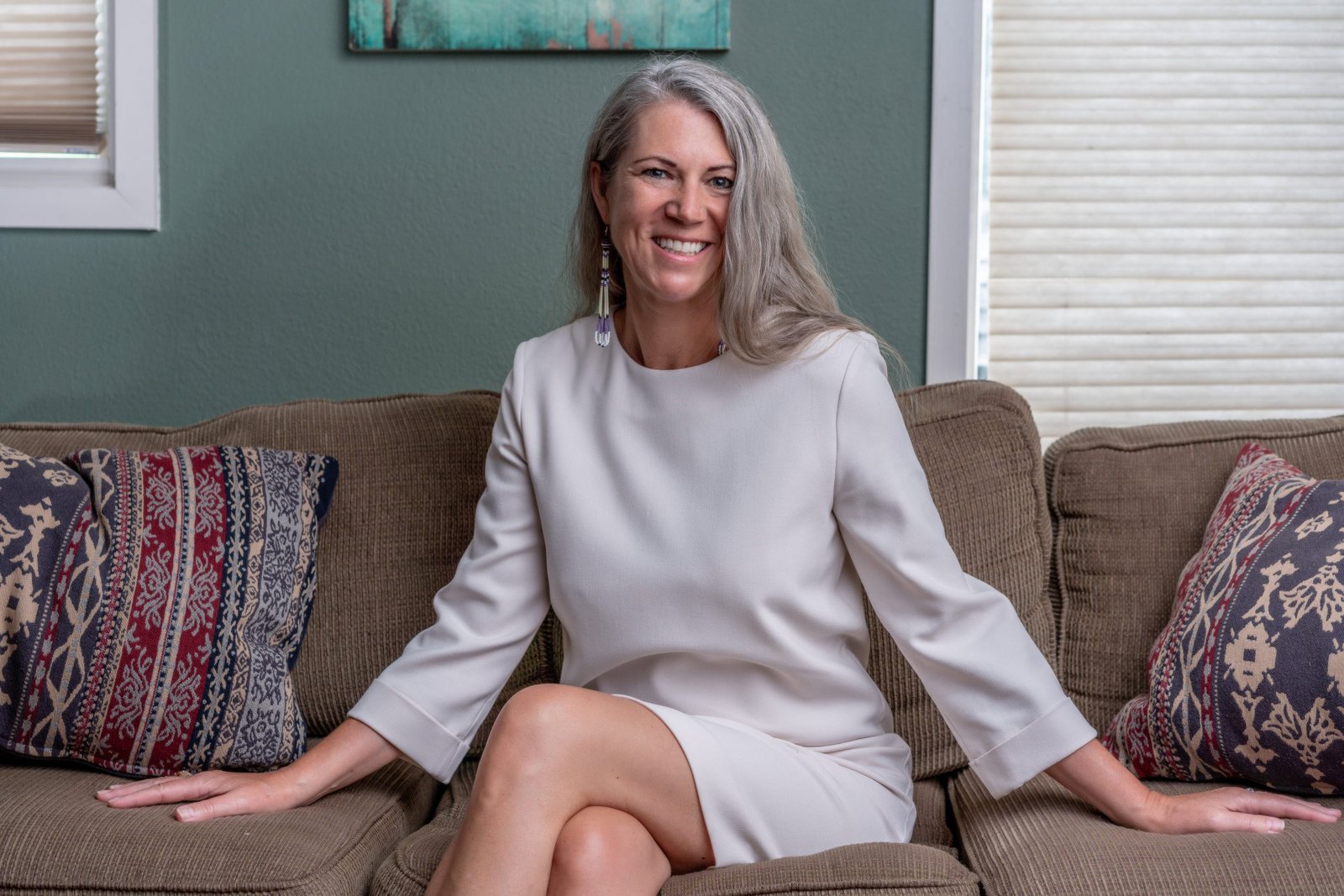
One-off trainings inspire, but rarely lead to transformation. Dr. Kimber Olson is helping Tribal governments bridge the gap between Western metrics and Indigenous “Original Instructions” to create systems that actually last.
When tribes confront staff burnout, turnover, or the limits of trauma-informed care, they are often offered a familiar solution: a one-day training. The team attends. They learn new tools. They leave energized.
And then they return to the same system.
For Kimber R. Olson, MSW, PhD — an enrolled member of the Chiricahua Apache Mimbres Band Nation and founder and CEO of Juniper & Pine Consulting, LLC — that gap between inspiration and sustainable change is exactly where her work lives.
“We don’t come in with answers,” Olson says. “I don’t have answers for any community. What I can do is help them find their own — and help them build systems that actually support those answers.”
What Juniper & Pine Actually Does
Juniper & Pine Consulting, LLC works with tribal governments, tribal enterprises, and Native-serving organizations to integrate cultural values into the actual structure of their programs — not just into mission statements, but into policy, supervision, language, and daily operations.
Its work typically begins with an organizational assessment and evolves into multi-year engagements focused on leadership alignment, workforce development, policy redesign, and measurable performance outcomes.
Olson describes her team as Native-centered consultants who focus on long-term organizational change rather than one-time training.
In practical terms, the work often focuses on reducing staff turnover, addressing burnout among frontline workers, strengthening leadership capacity and aligning policy with cultural teaching.
Instead of delivering a packaged solution, Juniper & Pine begins with a needs assessment and a central question: What would success look like for you?
From there, the work is tailored to the specific nation, program, and leadership goals. Engagements often span one to three years to ensure changes are implemented, supported, and measured — not simply introduced and abandoned.
How This Is Different from “Trauma-Informed Training”
Trauma-informed care has become a widely used framework in health, behavioral health, education, and social services. At its core, it teaches providers how to interact with people who have experienced toxic stress and/or trauma without causing further harm.
Olson respects that work. She has delivered it herself. But she sees its limitations.
“A one-time trauma-informed training isn’t going to change your system,” she explains. “It may move the needle. But it won’t fundamentally create sustainable change.”
Traditional trauma-informed models often focus on techniques — how to speak differently, how to structure environments, how to recognize dysregulation. Those tools are valuable.
Many trauma-informed efforts focus on techniques. Juniper & Pine focuses on systems.
In Indian Country, that context matters.
Many frontline staff in tribal programs are walking with relatives who carry both historical trauma and present-day stressors tied to poverty, substance use, systemic inequities, and intergenerational harm. Often, the staff themselves carry similar histories.
Without structural support, even the most committed worker burns out.
Juniper & Pine moves beyond technique and into systems transformation — embedding cultural frameworks, leadership practices, and organizational policies that sustain the work over time.
Returning to “Original Instructions”
Central to Olson’s approach is a return to what many Indigenous communities call “original instructions” — the foundational teachings that guided governance, caregiving, and conflict resolution long before western systems formalized medicine or management theory.
Rather than “adding culture” as an accessory, Olson asks tribal leaders to consider how those teachings show up — or fail to show up — in current policies and procedures.
“Western healing is often individual,” Olson says. “Indigenous healing has always been communal, and regulation is remembering. Our ancestors didn’t call it nervous system regulation. They called it ceremony. They called it gathering. They called it coming home to each other.”
This is the foundation of her Indigenous Healing-Centered Regulation Framework© — a three-strand braid of Indigenous Knowledge, Decolonization as Infrastructure, and Nervous System Science. The framework does not treat culture as an accessory to be layered onto existing programs. It asks tribal leaders to examine whether their current policies, supervision structures, and daily operations are regulated — and whether they reflect the teachings their communities genuinely value.
In previous generations, healing practices were not labeled as interventions. They were simply life. Funerals, round dances, seasonal ceremonies, communal meals — these were mechanisms for preventing and processing trauma.
The Sweetgrass Spiral Arc, central to Olson’s framework, maps this movement: the spiral outward into activation, held by right relations, and the spiral back to center — not as pathology, but as the sacred rhythm of living systems.
From there, the work becomes practical:
- What music plays in a waiting room?
- What foods are served at staff gatherings?
- How are elders engaged — and compensated — as knowledge keepers?
- How do staff transition out of difficult work at the end of the day?
Those details are not incidental. They are, as Olson’s framework teaches, environmental medicine — shaping nervous systems, and by extension, shaping organizations.
Even practices often described in spiritual terms, such as smudging, can be understood both culturally and scientifically. Olson integrates western polyvagal research alongside Indigenous teachings, not to validate one with the other, but to illuminate what her people have always known. Western neuroscience now documents what Indigenous communities have practiced for generations — that oxytocin, serotonin, and cortisol regulation are activated not by clinical intervention, but by the precise conditions ceremony has always provided: safety, connection, rhythm, and belonging.
“We’re not asking people to choose between western science and Indigenous knowledge,” Olson explains. “We’re saying both can exist. And our teachings were here first.”
Why This Matters for Tribal Governments and Enterprises
For tribal leadership, this work is not abstract.
Staff turnover costs money. Burnout reduces productivity. Lateral violence and internal conflict destabilize programs. Federal grants increasingly require evidence-based approaches while also encouraging cultural relevance.
Juniper & Pine operates at the intersection of those realities.
Olson integrates measurable performance metrics — tracking turnover, sick leave, and morale indicators alongside cultural integration efforts — to demonstrate whether structural change is working.
That means ensuring tribal programs are not forced to rely solely on external models that may not fit their people.
Protocol, respect, and relationship-building are foundational.
Grounded in Experience
Olson’s approach is informed by three decades of work across Indian Country: as a frontline tribal social worker, a licensed therapist, a behavioral health leader, a federal technical assistance provider, and now as a consultant.
“We already know the way,” she says. “We’ve always known the way. It’s about remembering.”
That remembering is not nostalgic. It is structural. It shows up in policy, leadership decisions, workforce development plans, and daily practice.
And it takes time.
Sustainable systems change does not happen in a single training. It requires partnership, humility, and follow-up.
For tribal governments and Native-serving organizations seeking more than a workshop — seeking transformation that aligns with their own teachings — Juniper & Pine offers a steady, credible path forward.
About the Founder
Kimber Olson, MSW, PhD, is an enrolled member of the Chiricahua Apache Mimbres Band Nation and the visionary Founder and CEO of Juniper & Pine Consulting LLC. With over thirty years of experience partnering with more than 250 Indigenous and Alaska Native communities, Dr. Olson is a leading voice in Indigenous healing-centered systems transformation. Dr. Olson offers professional development through three 100% Indigenous-led certification pathways: the Trauma-Informed Indigenous Solutions™ (TISI) Certificate Program, the Indigenous Facilitator Certificate Program, and the Certified Indigenous Healing-Centered Practitioner (CIHCP) pathway. Her work bridges the gap between western neuroscience and Indigenous Ways of Knowing — offering systems-level transformation that embeds cultural teachings into policy, supervision, leadership, and daily organizational practice. Driven by the foundational belief pinu’u echicasay (“I am all my relations”), she advocates for a holistic approach to wellness that integrates Spirit and Native science—elements often missing from traditional western models.
Ready to bring culturally grounded, healing-centered transformation to your community?
For individual in-person training, please refer to the JP Pricing Overview for a detailed breakdown of investment options. For organizations seeking long-term, systemic impact, we offer exclusive multi-year programs. These comprehensive partnerships include: A deep-dive needs assessment to align with your community’s specific goals. Four on-site trainings per year led by Dr. Olson and our expert team.Custom-tailored “Building the Bundle” framework meetings—a signature, onsite experience available exclusively through our multi-year pathways. Begin your journey toward collective healing and stewardship-based leadership today: https://www.juniperpineconsulting.org/certificationpathways