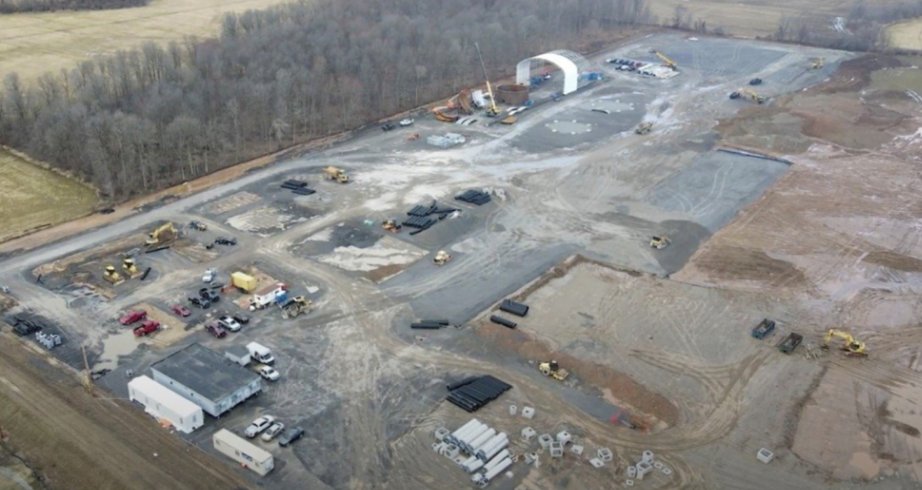
Editor’s Note: In a series of articles exploring the large-scale development of data centers and the implications of artificial intelligence (AI), this initial offering by Dr. Nichole Keway Biber considers the broader context of Indigenous cultural continuity despite destructive colonial norms.
GUEST OPINION
The Seven Fires Prophecies central to the teachings of the Anishinaabe people confirm that we have collectively reached the time of the Seventh Fire, when we revive the knowledge and practice of our traditional lifeways by “picking back up what was left behind on the trail.” The Seventh Fire is also the moment when humanity reaches a crossroads and must choose between two paths. One path leads to the destruction of life on Earth. The other lights the Eighth Fire of true brotherhood by restoring relationships with our living planet.
As the multi-billionaire oligarchs of Big Tech and Big Oil push a dystopian vision of autonomous war machines and humans reduced to little more than sources of data, we—the people on the ground—must choose another path: protecting and restoring our real-world dependence on water, food, and wildlife.
Communities throughout Michigan and across Turtle Island are banding together to oppose the rapid expansion of AI data centers, often setting aside the false divisions of political parties and culture wars. For Indigenous people in particular, it is imperative that tribal leadership does not take the financial bait to allow these developments on tribal lands. We must remain dedicated to revitalizing our lifeways and protecting our shared waters. Our teachings and languages offer guidance not only for our own communities, but for society as a whole, as we all depend on the biodiverse fabric of life on Earth.
The rush to build data centers is simply the newest form of the “land grab” that sits at the rotten core of exploitative, consumption-driven economies. Many of us use existing data centers to stream movies or archive photos. But the new wave of proposals is designed specifically to entrench AI technologies—systems that remain largely unregulated in the United States and are often shrouded in secrecy.
Developers frequently arrive with non-disclosure agreements (NDAs) that make nontransparency part of the process. These practices normalize rezoning land and signing contracts without clear answers about water use, electricity consumption, noise and light pollution, electromagnetic fields (EMFs), per- and polyfluoroalkyl substances (PFAs) levels, and other environmental risks. Such secret deals stand in direct opposition to the egalitarian decision-making traditions common among tribal nations—governance philosophies designed to protect the well-being of the next seven generations.
Even the ultimate uses of AI remain largely unspecified. Yet the technology is uniquely suited for mass surveillance and has already been used by Immigration and Customs Enforcement (ICE) domestically and in warfare abroad, including in Gaza. The smug conviction that Big Tech represents inevitable progress mirrors the propaganda of Manifest Destiny, which once justified the destruction and displacement of Indigenous nations and our more-than-human relatives.
AI ultimately strengthens predatory capitalist systems that profit from alienating people from the land, water, and wildlife. It reinforces an extractive economy that treats human beings as “consumers” rather than as relatives within a living world. As surveillance expands and power consolidates, people increasingly become raw material for the military-industrial machine.
We must resist. We must reject the lure of AI-generated convenience that quietly steals data as a default setting. Our stories, teachings, and language revitalization efforts cannot be exposed to exploitative technological systems that treat culture as data to be mined.
The power of those who exploit and extract grows only by diminishing everything else, because value is measured solely by economic growth. Meanwhile, the growing of food becomes increasingly insecure. Earth and her living beings cannot take much more. We cannot survive—let alone thrive—in landscapes stripped of life.
We must retain our capacity to engage with the living Earth not as masters, but as dependents and potential healers.
The truth is simple: all of us require water, food, and reciprocal relationships with the biodiversity of species. As long as we continue to breathe, we still have the ability to heal, regenerate, and replenish.
The first steps are simple. Don’t click on AI. Organize collectively to say NO to data center development everywhere—especially on tribal homelands. And start planning what native plants and foods you will grow this spring in your home or community garden to feed our families and welcome the more-than-human relatives who nourish our spirits.
Walk the path our ancestors and descendants have entrusted us to choose.
Upcoming articles will take a closer look at the impacts of data centers on water and wildlife, and further examine how AI threatens cultural touchstones and tribal sovereignty.
Dr. Nichole Keway Biber is a citizen of the Little Traverse Bay Bands of Odawa Indians. She serves on the Michigan Anishinaabek Caucus, where she leads the Wolf and Wildlife Preservation Team.