Section 105(l) is giving Tribes more control over the facilities their communities rely on, creating a more defined and predictable approach to funding, operations, and long-term infrastructure planning.
SPONSORED STORYTELLING. For many Tribal governments, the challenge is not identifying infrastructure needs—it is securing reliable funding to operate and maintain the facilities their communities depend on. Section 105(l) leases are increasingly a part of that solution.
Under Section 105(l) of the Indian Self-Determination and Education Assistance Act (ISDEAA), the federal government is required to enter into a lease for facilities that Tribes and Tribal Organizations are using to carry out programs they have assumed under their self-determination and self-governance contracts or compacts.
Although it is legally a lease under Section 105(l), in practice it functions like a cost-based reimbursement agreement, where the federal government pays the Tribe for allowable facility expenses. At its core, the program is designed to reimburse Tribes and Tribal Organizations for the costs to operate and maintain facilities tied to assumed self-governance programs.

“Section 105(l) of ISDEAA fulfills treaty obligations by supporting Tribes and Tribal Organizations in operating and maintaining the facilities tied to Tribally assumed federal programs,” said Kim Reitmeier, president of Tribal Development Partners. “Ultimately, it gives Tribes more control over how those essential services are delivered and sustained within their communities.”
From program intent to practical application
Under a 105(l) lease, a Tribe that owns or controls a facility that is delivering services under ISDEAA can enter into a 105(l) lease with the federal government for that facility. The federal government then reimburses costs tied to the operation, maintenance and use of that facility, creating a predictable stream of federal funding tied to those services. These lease agreements are often with the Indian Health Service or the Bureau of Indian Affairs.
Compared with traditional federal funding pathways, the structure is more defined. Projects are tied to specific facilities, with identifiable costs and ongoing obligations.
The scale of that shift is already visible. Annual lease payments have grown from less than $1 million in 2016 to more than $600 million in recent years, with nearly 1,900 leases in place, according to an analysis by the Center for Indian Country Development at the Federal Reserve Bank of Minneapolis.

“Tribes are in the best position to manage their own facilities—how they are maintained, how they operate, and how they serve the community,” said Luke Welles, general manager of Tribal Development Partners and a former chief financial officer in the Alaska tribal health system. “What we’re seeing is a shift toward a more defined structure, where that control is supported by clearer expectations and more consistent funding over time.”
Expanding the range of projects
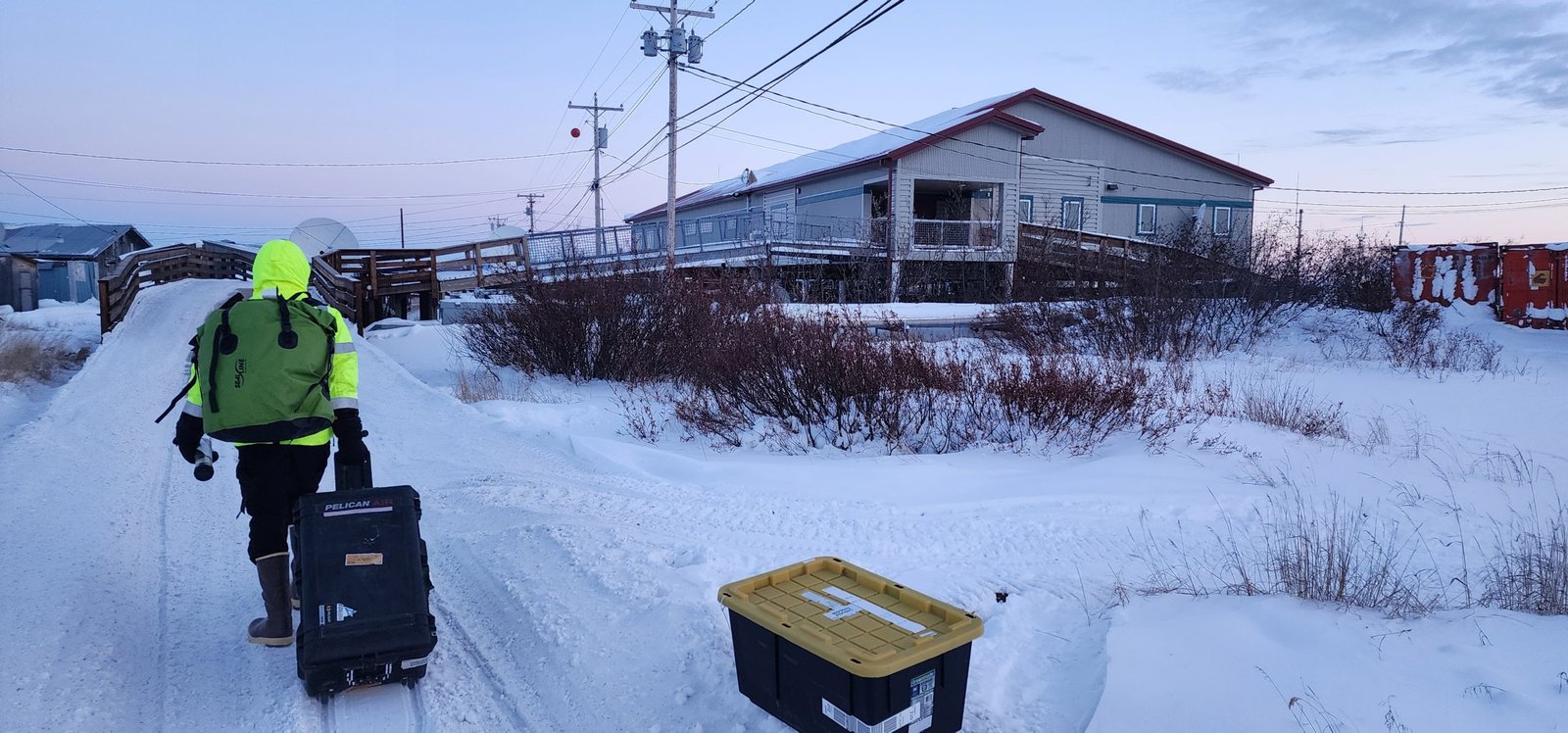
The model has been shaped through real-world applications over the past decade, including work with the Maniilaq Association in northwest Alaska. That effort demonstrated how 105(l) leases can support facilities tied to health and social services programs.
A recently completed police department facility on the Gila River Indian Reservation in Sacaton, Ariz. illustrates how the model can extend beyond health care. The more than 50,000-square-foot building includes dispatch, evidence processing, training space, and community meeting areas. The project replaced a shared facility that no longer met the community’s needs as staffing and services expanded.
The new building was developed using the section 105(l) lease structure, aligning federal funding with a tribally managed facility and demonstrating how a Section 105(l) lease can support a range of infrastructure needs.

“Section 105(l) leases can support a range of facility types, as long as they are in service of compacted or contracted federal programs,” said Shad Schoppert, director of facilities and engineering at Tribal Development Partners. “What we’re seeing is Tribal leaders taking a more deliberate look at how Section 105(l) leases support long-term sustainability across their broader infrastructure plans.”
Addressing hesitation and misunderstanding
Despite increased use, the Section 105(l) lease program is still not well understood. Tribal leaders often approach 105(l) leases with questions about intent, oversight, and long-term implications. Reitmeier said those concerns are part of the process.
“There is a level of hesitation, which is understandable,” she said. “At the end of the day, Tribes want to be sure they are making decisions that align with their priorities. Our role is to help clarify what the 105(l) lease program is and what it is not.”
That includes reinforcing that 105(l) leases are grounded in existing federal law tied to self-determination, not a new or temporary funding mechanism. They are designed to support programs that Tribes are already operating under ISDEAA contract or compact authority.
Once that foundation is clear, conversations naturally shift.
“After understanding the intent, Tribes begin to see how this can fit into their long-term planning,” Welles said. “It becomes less about a single project and more about how infrastructure is managed over time.”
A more defined system for funding and oversight
For both Tribes and federal agencies, the structure can bring greater clarity to how funds are used.
Instead of navigating multiple funding streams with varying requirements, 105(l) leases tie payments to specific facilities and defined costs associated with operating those facilities.
That structure is also showing up in capital markets. Recent projects tied to Section 105(l) lease revenue — including developments by the Maniilaq Association and the San Carlos Apache Healthcare Corporation — have received A- credit ratings from Fitch Ratings, with investors underwriting a combination of federal reimbursement streams and tribal operating performance.
As Tribes build a track record of managing facilities under 105(l) leases, some are evaluating how that structure may support future financing strategies. While the program itself is not a financing tool, the predictability of lease payments and defined project costs can inform broader capital planning discussions.
Control, accountability and long-term outcomes
At a broader level, the growing use of Section 105(l) reflects a shift in how Tribes approach infrastructure tied to federal programs.
Rather than relying on externally managed programs, Tribes are increasingly seeking models that align funding with local control, cultural priorities, and long-term stewardship.
That shift has practical implications. Tribes that own and operate their facilities are positioned to maintain them based on community needs, incorporate culturally relevant design, and directly manage operations.
The most significant impact is that 105(l) leases enable Tribes and Tribal Organizations to access the funding needed to maintain their facilities and infrastructure without having to subsidize those costs themselves.
Tribal Development Partners is a Native-led firm that partners with Tribes to align federal funding with Tribal priorities. The company supports infrastructure development and long-term facility management, with a focus on optimizing Section 105(l) programs.
For more information, email info@tribaldevpartners.com or call 1-855-837-TDP-105L
DISCLOSURE: This article is sponsored content created by Native Story Lab for Tribal Development Partners. It was created and published as part of a paid partnership and was not reported by the Tribal Business News editorial team.