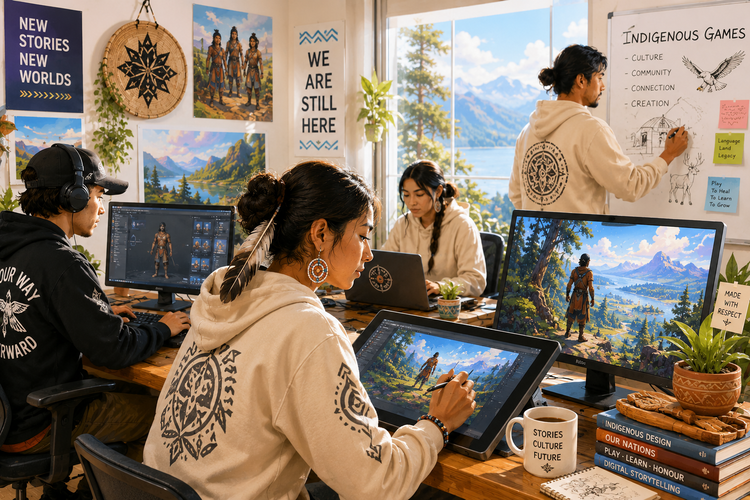
Video games used to either ignore Indigenous peoples or shove them into tired stereotypes — mystical shamans, noble warriors, feather-and-buckskin clichés. That’s finally changing. Across Australia and North America, Indigenous-led studios are building games around their own stories, languages, and survival knowledge shaped over thousands of years. These developers are not asking permission. They are taking control of their own narratives.
Little Buffalo Studios And The Wisdom Of The Campfire
Akiiwan: Survival is the debut project from Toronto-based Little Buffalo Studios, an Indigenous-led team with creators from the Red River Métis, Anishinaabe, and Mohawk nations. The game won the 2024 Unity for Humanity Award before most people even played it.
“Players awaken beside a talking campfire. A fox stares back. They have fallen from the sky, and winter is coming.” The game weaves authentic survival techniques — passed down for over ten millennia — into a meditative, low-stress experience. There is no pointless grinding or endless tree-chopping. Instead, the stars themselves teach players how each tool was actually made.
Jeremy Nelson, producer and designer at Little Buffalo, puts it simply: the team is not just making a game. They are reviving ways of thinking that helped their ancestors survive for generations.
Oshki Games And Anishinaabe Storytelling
Not far behind, Oshki Games arrived in 2024 as an Anishinaabe-led indie studio out of British Columbia. The crew blends modern tech with Indigenous storytelling and cultural values, working closely with artists, developers, and designers to build digital experiences that deepen understanding of Indigenous culture. The name fits perfectly. “Oshki” means new or fresh in Anishinaabemowin. Games built not only for entertainment, but for connection to heritage too.
Guck And Blaktasia — Healing The Bush From Melbourne
Down in Naarm (Melbourne), the Aboriginal-led studio Guck is taking a different approach. Their first mobile game, Blaktasia, centres on restoring bushland, protecting native wildlife, and pushing back against a corrupting force known as the Murk. The studio is fully Aboriginal-led, with the game pulling directly from Indigenous Australian culture, artwork, and traditional land management knowledge.
Blaktasia launched as a free title in late 2024 with backing from Screen Australia. After years of misrepresentation and straight-up ignorance of Aboriginal culture in games, Guck built something healing. Once the project ends, the team will disband — but their impact will spread as developers carry their expertise across the industry.
Native Themes In Online Slots
Indigenous culture has influenced plenty of online slots, particularly games built around mythology, spirituality, and traditional symbolism. Games like Aztec’s Millions, Maya, Navajo Way, Indian Chief, and Totem Tower build their presentation around recognisable cultural imagery, including:
- dreamcatchers
- tribal masks
- eagles
- ceremonial drums
That approach goes beyond Native American inspiration. Some developers have released pokies based on Aboriginal Dreamtime stories and Māori mythology, bringing Indigenous storytelling traditions into online gaming spaces as well.
Players looking through Australian pokies at australianonlinecasinoguide.com can find plenty of themed titles alongside newer PayID pokies options that support faster transactions for Aussie users.
Themed Australian pokies mix classic reel gameplay with culture-inspired artwork and sound design, while a reliable online casino Australia usually offers a broad variety of titles. Entertainment lands far better when cultural heritage is handled with respect instead of being turned into a cheap visual gimmick.
Hill Agency And The Invisible Games
Hamilton-based Achimostawinan Games released Hill Agency: PURITYdecay, a cyberpunk investigation starring Méeygen Hill, a Néhinaw (Cree) protagonist. The game blends Indigenous futurism with noir storytelling. It is sharp, angry, and beautiful. Yet most mainstream gaming outlets barely covered it.
MobileSyrup recently noted that out of the thousands of games being developed in Canada, only a tiny fraction have Indigenous creators at the helm. The 2024 hit Two Falls (Nishu Takuatshina) by Montréal’s Unreliable Narrators stands as another rare exception. Most Indigenous-made games remain invisible to the general gaming public — not because they lack quality, but because discovery algorithms and media gatekeepers consistently overlook them.
What Gaming Looks Like When Indigenous Communities Lead
The difference between old representation and new creation is simple. Outsiders make characters. Communities make worlds.
- Authenticity by design – Little Buffalo consulted elders and knowledge keepers at every stage of Akiiwan’s development
- Language preservation through play – Games like the upcoming Michif RP teach endangered Indigenous languages within virtual worlds
- Economic sovereignty – Every dollar spent on Indigenous-led games stays partially within communities that designed them
- Healing over harm – Blaktasia restores virtual bushland, making the act of playing become an act of care
As Oshki Games states on their website, the team is dedicated to crafting unforgettable gaming experiences by seamlessly merging cutting-edge technology, innovative design, and rich Indigenous storytelling with cultural values.