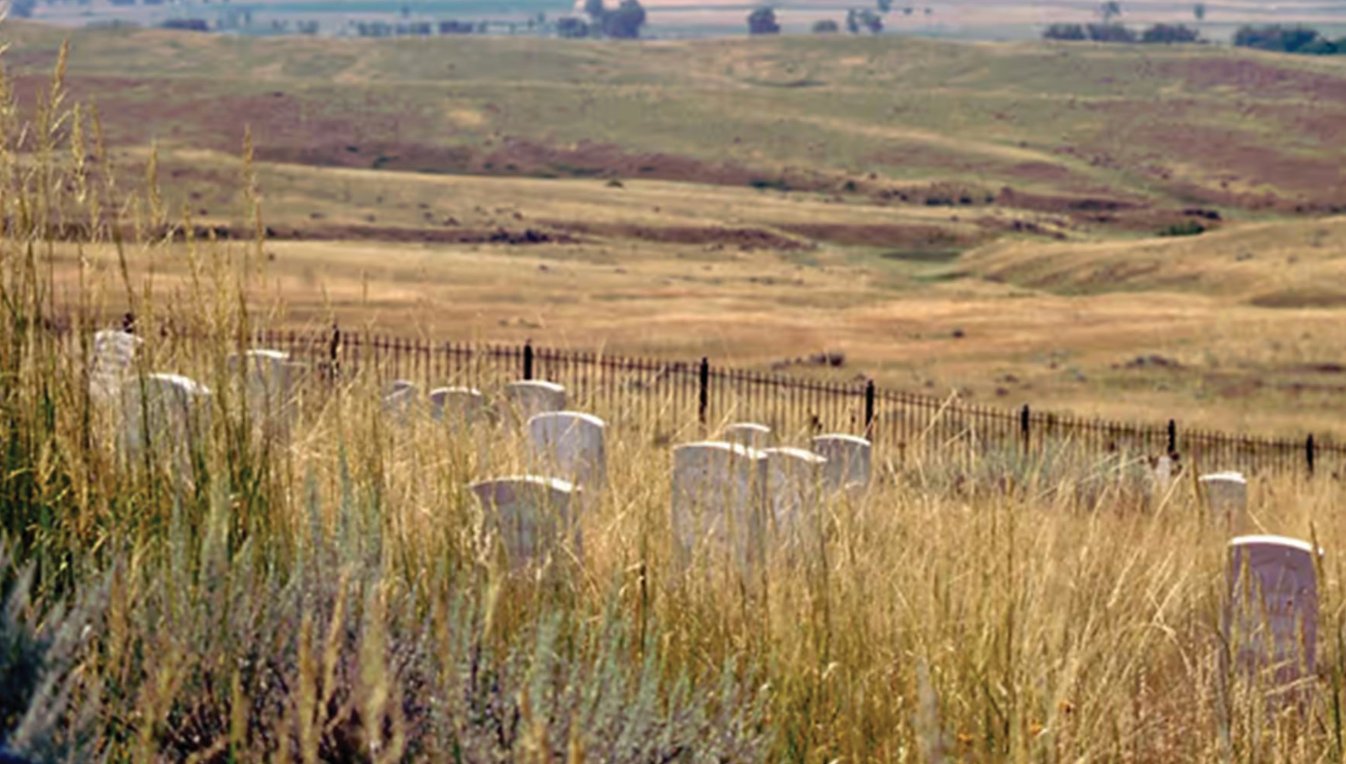
Today, Indian Country commemorates the 150th anniversary of The Battle of Greasy Grass — widely called the Battle of the Little Bighorn — in which Plains tribes prevailed over federal troops who staged a surprise attack in a bid to round them up and force them onto reservations.
It was a victory for sovereignty and Native lifeways that the government was intent on destroying in the name of manifest destiny. Today, it is a reminder of resiliency, that strength comes from both ancestors and the next seven generations.
We talked to Valeriah Big Eagle, director of Hesapa Initiatives at the NDN Collective, a Rapid City-based advocacy organization, about the lasting impact the battle has on Native culture, America 250, and the ongoing fight for landback in the Black Hills.
Growing up on the Yankton Sioux Reservation, how did you learn about the Battle of Greasy Grass? What did it mean in your community?
We always learned about the warriors and chiefs that came from our Oceti Sakowin — Sitting Bull, Crazy Horse — there were always stories of resiliency, of standing up for our people, protecting our land, and the displacement of our people from our treaty lands and homelands onto reservations that weren’t our traditional homelands.
When it came to the Battle of Greasy Grass specifically, what I remember hearing is that this was the moment when our people stood up against the Seventh Cavalry and General George Armstrong Custer — that we fought for our people, we fought against the government, and we were successful. On horseback, against everything the Seventh Cavalry had, that was a huge, huge victory. For me, it’s a reminder that we’re still here, that we’re still fighting for our land and our way of life. It reignites that resiliency and that warrior spirit that lives within our people.
What are some of the biggest misconceptions average Americans have about this battle and its legacy?
One of the most common things I encounter, even just going into cities, is that people don’t understand that we’re still here. There’s this assumption — “Oh, I thought you were all killed off” — and the answer is: no, we’re still here, and we’re stronger than ever. What happened to our people was a cultural genocide, a genocide of our land and our people.
Another misconception is around our relationship to the land itself. It’s not that we own the land — we are stewards of the land. The greed that Western society has placed on extracting from the land is something we know is unsustainable. Mother Earth will turn on us. We have to protect her. That is our way of life.
The 150th anniversary of the Battle of Greasy Grass falls very close to the America 250 celebration — and there is a tension there that I can’t put my finger on. What do you make of it?
I think this moment is reigniting our warrior spirit, but it’s also reminding people that we are coming together in solidarity again — the Cheyenne, the Arapaho, the Kiowa, several tribal nations uniting to remind America that we’re still here.
There’s also a through line here when it comes to Indigenous and Black repatriation. This land was built with stolen hands. The so-called founding of America left many people in this nation who are still not free — and we see that today, whether it’s in the rates of poverty on reservations, our children who don’t have food to eat, or communities being torn apart. What does true liberation really look like for us as people on Turtle Island? For me, as a Lakota and Dakota woman from the Yankton Sioux Reservation, it means my children can be inherently who they are — proud, celebrated, with a sense of belonging. My son is 10 years old, and I remember a time he was shamed because other kids didn’t understand the cultural significance of his long hair. Liberation means never having to experience that. It means honoring our ancestors and fighting for future generations to come.
How do you see the Battle of Greasy Grass continuing to impact Native Plains culture today?
This moment is significant because we can build on this momentum — Indigenous tribes coming together in solidarity, fighting for the return of our lands, reconnecting with our cultures and languages, remembering who we are and where we come from.
A big part of that is the continued fight for the Black Hills — protecting them from all extractive activity, including uranium mining and other efforts we advocate against at the Indian Collective. But it’s also about advocating for the return of federal public lands in the Black Hills back to the Oceti Sakowin, so that we have our land to pray on, to harvest medicines for ceremony, to protect from extraction.
And then there is the return of the buffalo — that is a whole movement in itself. But at the heart of all of it is this: we help heal our people by reconnecting them with who we are and who we have always been. When it comes to the struggles our communities face today — addiction, trauma, loss — healing comes through our way of life, through reconnection with our identity. That is how we move forward.