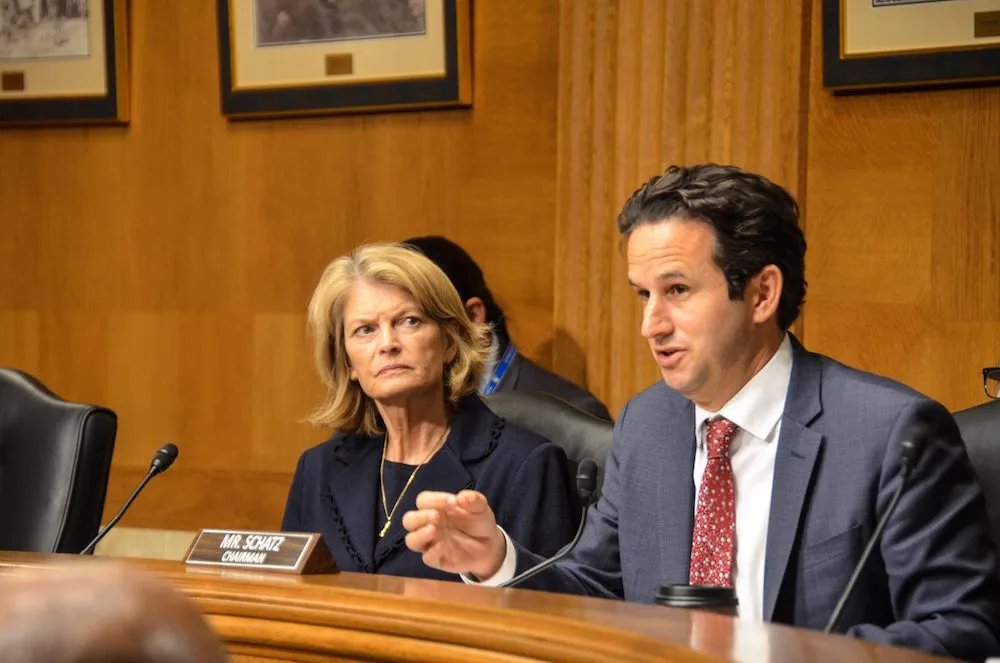
U.S. Sens. Lisa Murkowski (R-Alaska), chair of the Senate Committee on Indian Affairs, and Brian Schatz (D-Hawaiʻi), the committee’s vice chair, have introduced bipartisan legislation designed to improve the health, education, safety, and overall well-being of American Indian, Alaska Native, and Native Hawaiian children.
The Native Children’s Commission Implementation Act (S. 4976) is a comprehensive legislative package that translates recommendations from the 2024 report The Way Forward into federal policy. The measure represents the culmination of more than a decade of work led by Murkowski to address the unique challenges facing Native children and families.
The legislation is based on recommendations from the Alyce Spotted Bear and Walter Soboleff Commission on Native Children, which was created through bipartisan legislation championed by Murkowski and former U.S. Sen. Heidi Heitkamp.
Established to conduct the first comprehensive national review of federal programs and services affecting Native children, the commission spent years holding hearings, conducting listening sessions, and visiting Tribal communities across Indian Country. Its final report, released in February 2024, called for stronger coordination among federal agencies, improved data collection, enhanced support for Tribal self-determination, and culturally grounded solutions to improve outcomes for Native youth.
“Every Native child carries the strength, hope, culture, and future of their community, and we have a responsibility to ensure they have every opportunity to thrive,” Murkowski said in announcing the bill. She said years of visiting Alaska Native communities reinforced her belief that lasting change comes from supporting community-driven solutions developed by Native families, youth, and Tribal leaders.
Schatz said the legislation would make significant investments benefiting Native Hawaiian children and families by strengthening health care, housing, education, and Native language revitalization while ensuring Native Hawaiians have a meaningful role in shaping federal programs affecting their communities.
The proposal has received strong support from Tribal organizations and Native advocates.
National Congress of American Indians Executive Director Larry Wright Jr. (Ponca) called the legislation an opportunity to finally implement recommendations that have been a decade in the making.
According to Wright, the bill proposes more than $800 million in investments, including nearly $500 million that could begin reaching Tribal communities through federal set-asides. He said the funding would help Tribal Nations protect children, strengthen families, and build long-term systems of care.
The legislation also earned endorsements from the Cook Inlet Tribal Council and the Alaska Federation of Natives.
Cook Inlet Tribal Council President and CEO Gloria O’Neill described the bill as a “historic and comprehensive federal commitment” to Native children, noting that it addresses health, education, housing, nutrition, justice, and other issues through a coordinated approach informed by years of Tribal testimony and community engagement.
Alaska Federation of Natives President Ben Mallott said Native children thrive when policies are shaped by Native communities, cultures, and traditions, adding that the legislation reflects growing recognition that Native leaders must play a central role in decisions affecting Native families.
The bill also received praise from Native Hawaiian language advocates. Dr. Kauanoe Kamanā, president of ʻAha Pūnana Leo, highlighted provisions providing stable, direct funding for Native language schools and specialized teacher training programs.
Kamanā said the legislation recognizes the success of Native language immersion education and decades of work by Native communities to preserve and revitalize Indigenous languages. She added that the measure would help fulfill the federal trust responsibility while giving Native children greater opportunities to reach their full potential.
The Native Children’s Commission Implementation Act is organized into eight titles, addressing:
- Justice
- Housing and homelessness
- Education
- Child care and workforce development
- Nutrition
- Research and data collection
- Physical and behavioral health
- Environmental health
Supporters say the legislation transforms years of consultation with Tribal Nations into concrete federal action by strengthening Tribal self-determination and making long-term investments in Native children and families. The bill now awaits consideration by Congress.