
Listen to this article
Estimated 4 minutes
The audio version of this article is generated by AI-based technology. Mispronunciations can occur. We are working with our partners to continually review and improve the results.
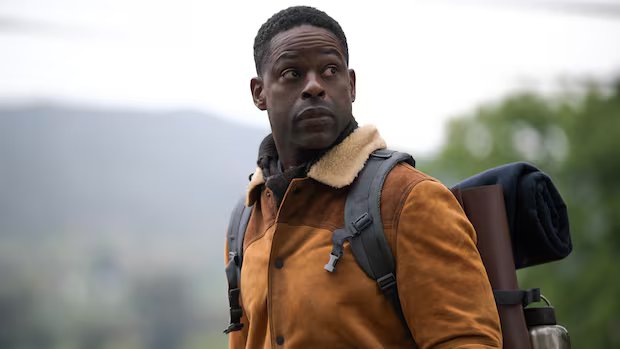
Sterling K. Brown knows Paradise is not necessarily the show you watch when winding down for the night.
That’s because the first season of the Hulu thriller series felt about as far from comfort food as possible. Set as it was in a government-run bunker following a climate catastrophe and ensuing nuclear holocaust, there were few warm fuzzies to find.
And given that inside that bunker, its inhabitants were perpetually finding out how their leaders had been lying to and manipulating them, there were some uncomfortably obvious parallels to draw.
“It’s the near future, so there’s a little bit of distance so people can look at it and be like, ‘Is that us?'” Brown, who both stars in and executive produces the series, said in an interview with CBC News.
“We wanted to make an entertaining show, but we did want to make something that made people think about the world in which they live in, and how are they contributing to its betterment — or to its detriment.”

Paradise’s new season
Now a year out from its original premiere and with a second season ready to debut on Monday, that general theme of political distrust and governmental calamity may seem even more applicable than ever before. If you were wondering whether that was intentional — and whether his own concerns have seeped into the framing of the show — Brown said you’re not necessarily too far off.
“If you ask [showrunner Dan] Fogelman, he’ll say not necessarily. But I think it is the place of the governed to inherently mistrust the government, right?” he said.
“Speaking from someone from the States in particular … the people who are getting elected are the people who receive the most money from special interests and from corporations — and not necessarily the people who are voting for them. Like, they’re serving an entity that pays them, that finances their campaign, rather than the people that they’re supposed to be serving.”
A seeming reflection of fracturing faith in political administrations — and creeping terror at the possibility of international conflict — permeates that first season; one of its most well-received episodes documents the horrifying realities the American government faced with an imminent nuclear attack and its relative lack of ability to save the majority of its population.
The show’s seeming tendency to reflect those growing real-world concerns isn’t entirely imagined, either. Brown said they had a plan from the beginning to make three seasons of television: one that focuses on life inside the bunker, a second to investigate what’s happening outside of it and then a finale still to come.
But in terms of reacting to current concerns, he said that was also built in. And more than that was the intention of subverting the “crucible of mistrust” in the first season — venturing out of the bunker in the new batch of episodes to explore how to combat an overwhelming feeling of pessimism.
“Our writers and us as producers can’t help but respond to like, ‘All right, what is in the zeitgeist?’ Like, what are the things that we are most concerned about right now, and how can we put that into an interesting format to help tell our story?” Brown said.
“Once you’re able to break that open and see the world for what it is — good, bad and ugly — then there’s actually space for hope, where there wasn’t space for hope inside of the bubble.”