
Native Vote 2026
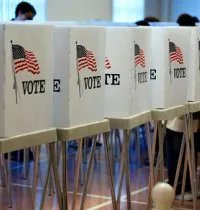
Early voting has begun across the United States. In Tennessee, early voting began October 14 for the November 3, 2026, general election. Tennesseans are voting for their next governor, members of Congress, state lawmakers and proposed constitutional amendments.
With hundreds of thousands of ballots already cast, some Tennessee voters are reporting problems with electronic voting machines that appear to select Republican candidates when voters intended to select Democratic candidates.
The reports have raised concerns about the reliability of touchscreen voting machines and prompted election officials to remind voters to carefully verify their selections before casting their ballots.
Voters are turning to social media to share their experiences with electronic voting machines, including Stella Parton, sister of country music icon Dolly Parton.
Parton shared her experience on Facebook on October 21 and described problems she encountered while voting early at the Hermitage Library in Nashville.
“After reading all the comments yesterday about the hiccups with the voting machines, I decided to go ahead and explain exactly what happened to me when I voted on the first day of voting in Nashville, Tennessee last week at the Hermitage Library,” Parton wrote in her post.
“I finally called over a poll worker when my ballot kept flipping to the wrong candidate on the third try. No, this is not a joke! But what good is your vote if the machines are ‘fixed,’” her post continued.
Parton wrote that she was “livid” and “so angry” about the division in the country, which she attributed “mainly” to the Republican Party and its lack of accountability.
Parton also criticized President Donald Trump for ridiculing “another man’s physique and people applaud,” referenced the “horrific things being done in Ukraine,” and expressed disgust at what she described as the actions of “clowns … like Pete Hegseth say; ‘we bombed Iran.’”
“Wake up America we are on the precipice of destruction,” Parton wrote.
Other voters have also taken to X, Facebook and other social media platforms to report problems with voting machines.
One X user wrote, “Texas, Florida, Tennessee, Ohio are reporting difficulties getting the machines to accept democratic votes. The machines change them back to Republican unless the voter persists, pressing several times to get the correct vote to go through.”
However, reports of touchscreen problems should not be confused with verified evidence of deliberate vote manipulation. Election officials have said that unintended touches or touchscreen calibration issues may explain why some machines initially display a different candidate than the one a voter intended to select.
In an official statement, Tennessee Coordinator of Elections Mark Goins reminded voters to verify their selections throughout the voting process. This includes checking the initial selection screen, the final review screen and the printed paper ballot.
Goins emphasized that voters should immediately report any discrepancy to local poll workers or election officials before submitting their ballots.
Election-System Failures Have Also Affected Native Voters
Concerns about election technology and the ability of voters to cast ballots have particular significance in Native American communities, where election-administration problems have historically created additional barriers to voting.
An investigation published October 30, 2026, by the Arizona Center for Investigative Reporting and Votebeat documented serious election-system failures affecting Navajo voters during the November 2024 election in Apache County, Arizona.
The investigation found that electronic pollbook malfunctions prevented election workers from reliably verifying voter registrations and issuing ballots. Printer failures contributed to long lines, and emergency paper ballots began running low at some polling locations.
Accessible voting machines also malfunctioned at some locations, creating additional difficulties for voters, including Navajo elders who rely on language-accessible voting assistance.
The investigation identified inadequate preparation, understaffing, technical failures and poor communication as contributing factors in the problems experienced by voters.
Although these incidents involved different types of election-system failures than those reported in Tennessee, they demonstrate how technology problems can interfere with the ability of Native voters to participate in elections.
The Native American Rights Fund (NARF) also released a report in August 2026 examining voting barriers using U.S. Election Assistance Commission data from the 2020, 2022 and 2024 elections.
The report, Obstacles Persist: According to the Data, found that mail-in voter registration rejections increased by an average of 200% in counties where Native Americans make up at least 25% of the population.
It also found that rejections of mail-in ballots for missed deadlines increased 134% in counties with Native populations exceeding 25%, compared with a 55% increase nationally.
The rate of provisional ballots successfully counted in areas with larger Native populations remained 15% below the national rate.
The Native American Rights Fund (NARF) directs Native voters experiencing problems at the polls to the national, nonpartisan Election Protection hotline
NATIVE VOTER PROTECTION HOTLINE
866-OUR-VOTE
866-687-8683
These findings underscore the importance of ensuring that election systems are accessible, reliable and accountable to every voter, including citizens of Tribal Nations.
As voters continue casting ballots in the 2026 midterm elections, election officials have a responsibility to investigate reported problems, provide clear information to voters and ensure that every properly cast ballot is counted.
The post Tennessee Voters Report Voting Machines Displaying Incorrect Candidate SelectionsTennessee Voters Report Voting Machines Displaying Incorrect Candidate Selections appeared first on Native News Online.