
Guest Opinion
A friend called and suggested looking at a video from the All Indian Governors Council, which represents 19 New Mexico pueblos, that outlines their opposition to the Senate’s Bipartisan American Affordability and Jobs Act. The main objection: Tribes lose a seat at the table and the measure will make it harder to protect sacred lands from development.
To read more articles by Mark Trahant, go to: Marktrahant.substack.com.
Yesterday the Senate voted on another procedural bill and continues to consider amendments. The final vote could still come this week and then the bill would move to the lame duck House.
What’s the rush? Why not wait for the next Congress where the bill could actually go through a legitimate process?
The champion of the bill, New Mexico Democrat Sen. Martin Heinrich has said: “This is the closest we have come to actually finding something that can get signed into law, and I’m not going to wait.”
Or have hearings. Or listen to communities. Or look at the data. Just pass the damn thing.
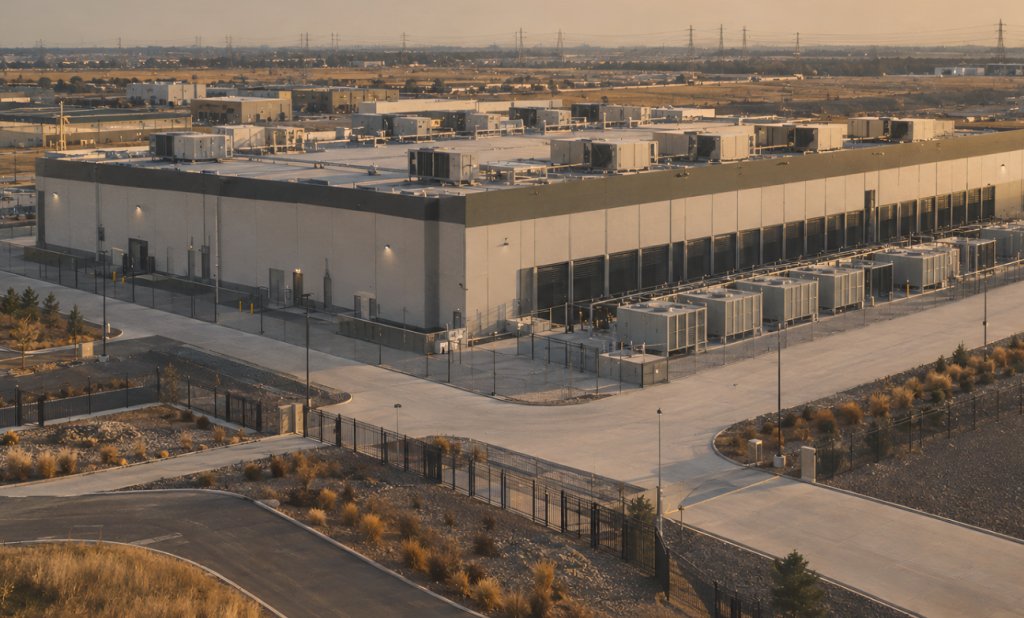
There is a lot going on below the surface. One of the sponsors pitches is that the permitting bill will make it easier to develop clean energy. But the trade off is it will also make it much easier to build data centers. And to develop more fossil fuel projects. So many reasons to make this legislation a no go.
Timothy Noah of the The New Republic says “the problems in this nearly 500-page bill are too numerous to fix through the amendment process or in House-Senate conference. It needs to be ripped to pieces so that Congress’s new Democratic majority, which will have much more leverage over the finished product, can start afresh.” He says Heinrich was ticked off because of the tactics used against the SunZia Wind and Transmission project.
“When I raised preservationists’ complaints about BAAJA with Heinrich (Whitehouse’s office didn’t reply to my query), he told me (again, via email): “I have listened to Tribes’ concerns and worked to codify in statute the federal government’s obligation to consult with Tribes under Section 106.… Still, I recognize there is more work to do, and I am committed to continuing to worsk with Tribal leaders and my colleagues to strengthen consultation beyond this bill.” Heinrich is right to suggest that such discussions can’t be conducted on the fly while the bill is days away from Senate passage.
But Native Americans are hardly the only preservation-minded groups opposed to BAAJA. The National Trust for Historic Preservation said last week in a prepared statement that it “remains strongly opposed to” BAAJA, which “retains provisions that give federal officials broad discretion to subordinate historic preservation to other considerations.” If, as Heinrich says, “There is more work to do,” why not do it before BAAJA is allowed to become law, rather than at some unspecified future date?”
A study released this week by led by the Harvard T.H. Chan School of Public Health and the Harvard Data Science Initiative show that over the course of a year, hyperscale data centers —the largest and most powerful class of data centers, supporting services such as cloud computing, large language model training, and global deployment of artificial intelligence (AI) tools—are powered mostly by fossil fuels and use as much electricity as entire U.S. states.
“While data centers are known to require significant electricity to run, few studies have examined this topic facility by facility, estimating not just how much electricity each HDC uses, but what fuels generated this electricity. For this study, the researchers used satellite imagery to build a list of 403 HDCs across the U.S. and estimated annual electricity consumption for each facility between May 2024 and April 2025 under a range of operating scenarios. They then used Environmental Protection Agency data to attribute carbon emissions to each HDC based on the mix of power plants in its regional grid.
“The study found that these HDCs, depending on how hard they were running, together used between 68 and 99 terawatt-hours of electricity—with the upper estimate approaching the amount some states, such as Indiana, Michigan, and Tennessee, use in a year. During the study period, HDC electricity demand corresponded to approximately 1.8% of total U.S. electricity consumption, and was associated with about 25.7 million metric tons of CO2—an amount two to three times higher than an earlier estimate for 2018.
“Today, electricity demand and carbon emissions are likely much higher than they were during the study period, the researchers say.
“What we’re seeing is already striking, but it’s only a snapshot of a rapidly expanding industry,” Guidi said. “The data center boom hasn’t slowed down since our study period ended in April 2025. New facilities have been built, existing campuses have expanded, and demand for AI computing continues to grow. That means the electricity use and carbon footprint we’re reporting could already be substantially larger now in 2026.”
“The study also found that roughly 54% of the electricity powering the HDCs was generated by fossil fuels—mainly natural gas (38%) and coal (15%)—and about a quarter of the electricity was in grid regions dirtier than average.”
And we need to build these data centers faster, why?
It’s also clear that the markets are starting to see the dangers of over capacity (that will be followed by a bust.)
The growing scandal involving the U.S. government and Nvidia is part of this complexity. The Wall Street Journal reported today that Jensen Huang saw the threat of public support shifting and wanted to create a superfund to speed things up. A few firms pledged $500 million to make bigger deals, faster.
Only, no.
But the promise was short on substance. To date, no capital has actually been deployed, according to people familiar with the matter. And investors are increasingly skeptical that the program will reach its lofty ambitions now that Huang has been ousted over a sex scandal.”
(I would reframe that last sentence: Nvidia (and the role of the government) is a national security and corruption scandal.)
My key take away: This is the moment to slow down and think more deeply about data centers, instead of inflating the bubble even higher.
The post The Senate Rush for Data Centers appeared first on Native News Online.