Most truck owners open a browser, fall down a rabbit hole of parts listings, and buy three things that don’t work together. You don’t have to be one of them. Getting your upgrade right in 2026 comes down to one thing, order of operations.
| What to Upgrade | Why It Matters | Where to Start |
| Front bumper | Protection + recovery capability | Match to your truck’s make and year |
| Wheels & chrome rims | Stance, fitment, visual identity | Confirm bolt pattern and offset first |
| Tonneau covers & bed gear | Cargo security, weather protection | Pick style based on bed access needs |
| Suspension & lift | Ground clearance, towing stability | Fix worn parts before adding any lift |
| Genuine auto parts | Reliability under load from mods | Source for your specific model |
Start With the Foundation, Not the Flashy Stuff
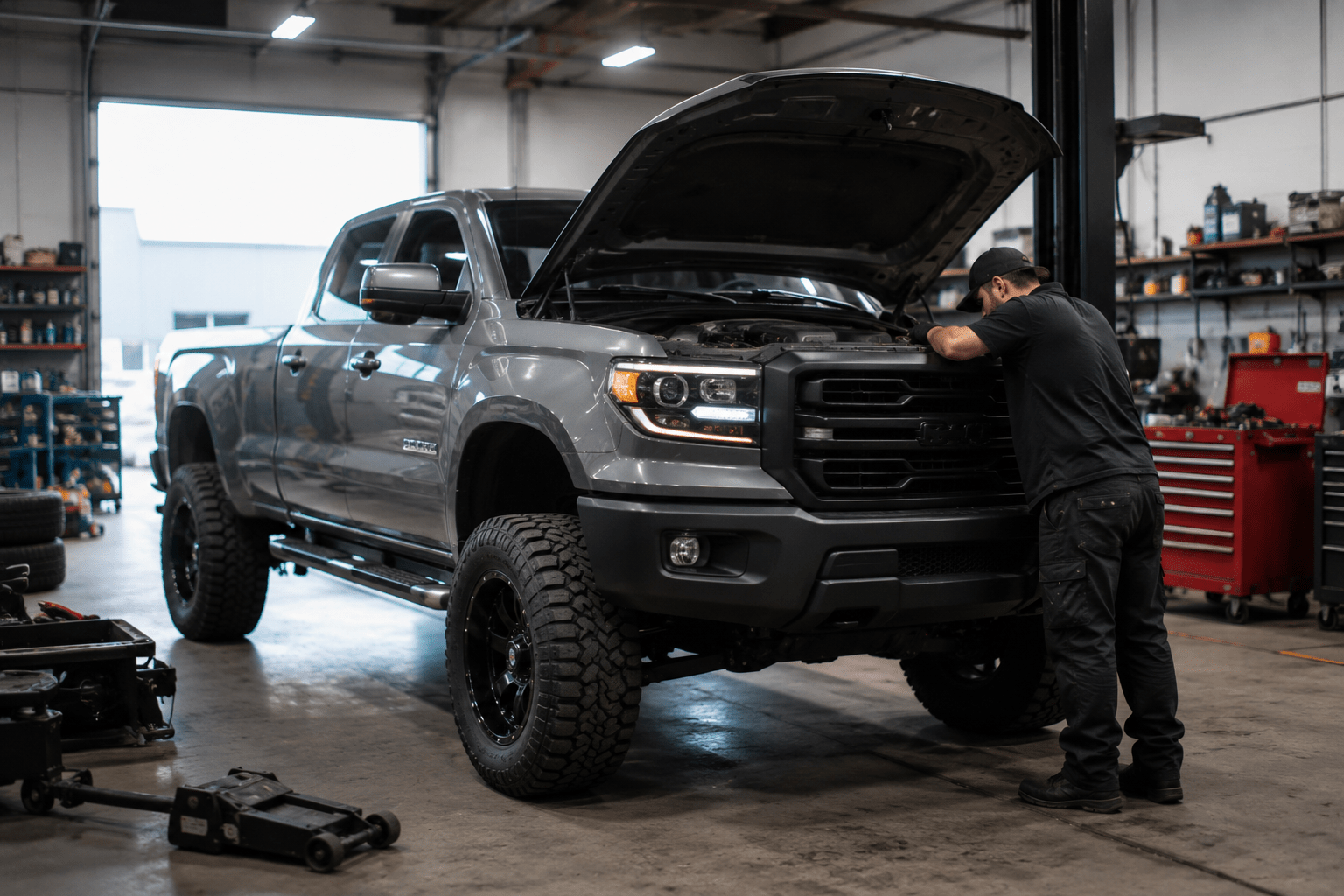
People buy lift kits before checking if their ball joints are worn. They order wheels before confirming the bolt pattern. They pick a tonneau cover that blocks the toolbox. They wanted to add two months later. These mistakes are common, and every one of them costs money to fix.
Before anything else, do a quick mechanical check: brakes, ball joints, tie rods, bushings, and steering components. Worn parts don’t just underperform — they fail faster under the added
stress of new weight or ride height. Catching that now saves you far more than a shop inspection costs.
A weekend trail rig needs a completely different build path than a daily work truck. If your truck is the primary mover for your job site equipment, ensuring your trailer and hitch are rated for heavy attachments is vital—especially when transporting high-impact tools like hydraulic breakers for skid steer loaders that add significant concentrated weight to your payload.
Front bumpers (more than just a looks upgrade)
A front bumper swap isn’t cosmetic. A solid steel aftermarket bumper changes how your truck handles real-world contact — whether that’s trail brush, a slow-speed tap, or a recovery situation where your factory plastic simply won’t hold up.
Beyond protection, a good bumper opens up mounting points for winches, light bars, and d-ring recovery hardware that stock bumpers can’t support. If you’re building toward trail use or heavy towing, this is one of the first structural changes worth making. Check out our front bumpers for trucks, which are built for specific makes and model years because fitment here matters more than most people expect.
Wheels (get the specs right before you fall in love with a set)
Swapping wheels is one of the most visible changes you can make and one of the easiest to get wrong. Before anything else, confirm your bolt pattern, hub bore, offset, and backspacing. A wheel that looks perfect in a photo can rub your fender or throw off your speedometer if the specs don’t match.
Chrome rims for trucks give a clean, high-contrast look that works across most truck styles, and when paired with the right tire size, they genuinely change how a truck carries itself. That word “paired” is doing a lot of work there. Wheels and tires are one decision, not two separate ones.
The truck bed is where you get the most actual use out of the vehicle, and it’s almost always the last thing to get any attention. That needs to change.
● Tonneau covers
A tonneau cover does three things well: keeps cargo dry, deters theft, and cuts drag over an open bed, which helps fuel efficiency. Hard folding covers balance security with access. Soft
roll-up covers give flexibility when you’re hauling tall items. Retractable covers offer the cleanest look with one-handed operation.
The wrong way to pick one is based purely on looks. Think about how often you need the full bed open, what you’re hauling, and whether you want a lock. Those three questions narrow the choice down fast.
If you work out of your truck, a cross-bed aluminum toolbox keeps your equipment organized and off the floor. Bed slides pull your entire load out toward you, save your back, and speed up access to gear tucked at the front. Both are worth deciding on before you lock in a tonneau cover, because not every cover style works with a crossbed box sitting behind the cab.
Most truck owners in 2026 aren’t chasing big horsepower numbers. They want improvements they feel every day, sharper throttle response, stronger towing stability, and a ride that doesn’t feel beaten up under load.
Cold air intake and exhaust
These two work well together. A cold air intake brings denser, cooler air into the engine and improves combustion. Pair that with a cat-back exhaust that lets spent gases exit more freely, and you get noticeably better throttle response and a cleaner sound — without touching the engine internals. Both mods are reversible and won’t stress your drivetrain.
Suspension
A 2- to 3-inch leveling kit or lift gives most daily drivers what they’re actually after: better stance, slightly more clearance, and room for a modest tire size increase. Go beyond 4 or 5 inches, and you’re affecting steering geometry and your center of gravity, that’s territory requiring real planning, not a weekend decision.
For towing, helper springs and upgraded sway bars make a bigger difference than most people realize. Sway bars in particular are underrated — they cut body roll through corners and keep a loaded truck stable at highway speeds.
Parts quality is one of the quieter problems in any truck build. Generic aftermarket parts are fine for low-stress applications. For anything suspension-related, load-bearing, or powertrain-adjacent, where you source from actually matters.
DMS Engineering started as a specialist fastener supplier and grew into a full hub for automotive components and 4WD modifications. They operate on a buyer-beware principle, are upfront about fitment responsibility and local compliance, and sit with the customer. That transparency is actually a useful filter. It tells you the products aren’t dressed up with empty promises. When you shop for the best Jaguar auto parts online or source components for a
specific build, genuine parts from a technically grounded supplier reduce the risk of a failure under load, which is exactly when you don’t want one.
1. What’s the first upgrade I should do on my truck in 2026?
Start with a mechanical inspection before spending anything on mods. Once you know where the truck stands, the first physical upgrade should address protection or utility, a front bumper or bed setup, based on how you use the vehicle. Aesthetic upgrades like wheels work better once fitment and tire sizing are confirmed.
2. Do chrome rims affect truck performance, or are they just cosmetic?
Wheel choice affects more than looks. The size, offset, and weight of aftermarket wheels change handling, speedometer accuracy, and whether tires clear the fenders. Always confirm bolt pattern, hub bore, and offset against your specific make and model before buying, fitment errors are expensive to correct.
3. Is it worth upgrading a truck I plan to sell in a few years?
Yes, but stick to practical mods. Tonneau covers, well-fitted wheels, upgraded tires, and sprayin bed liners hold value and can lift resale price. Extreme lift kits or aggressive ECU tunes can narrow your buyer pool. Keep the build functional and reversible whe