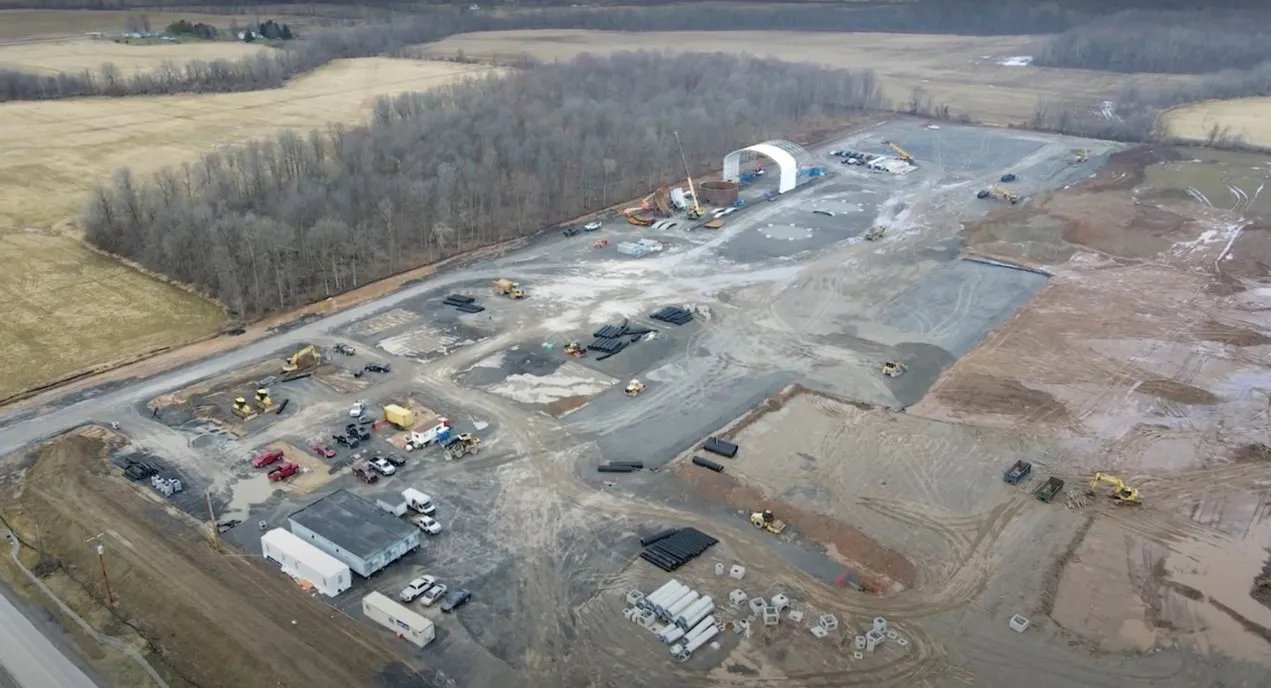
The Tonawanda Seneca Nation and the Sierra Club have filed a lawsuit challenging a zoning agreement they say unlawfully limits the Town of Alabama’s authority to regulate development at the Western New York Science and Technology Advanced Manufacturing Park (STAMP).
The lawsuit, filed in New York State Supreme Court, seeks to invalidate an agreement between the Town of Alabama and the Genesee County Economic Development Center (GCEDC), arguing that it unlawfully prevents the town from amending its zoning laws or comprehensive plan without GCEDC approval.
According to the complaint, the agreement violates New York law by improperly restricting the legislative authority of current and future Town Boards. The plaintiffs contend that because the agreement is invalid, the zoning framework created under it should also be declared void.
If the court rules in favor of the plaintiffs, the Town of Alabama would regain its authority to revise zoning regulations governing the STAMP industrial park, just as it can elsewhere within the town.
The lawsuit comes as GCEDC and the Town of Alabama Planning Board review a proposal from STREAM U.S. Data Centers to construct a 2.2-million-square-foot, 500-megawatt hyperscale data center at the STAMP site.
Supporters of the lawsuit argue that local officials have been unable to respond to residents’ concerns because of the restrictions imposed by the zoning agreement.
“Local residents, including Sierra Club members, have asked the Town to protect their community from STAMP noise and pollution by enacting stronger zoning laws, and the Town has responded that their hands are tied by this agreement,” said Diane Ciurczak, vice chair of the Sierra Club’s Atlantic Chapter. “That’s not right, either for the community or for the planet.”
Tonawanda Seneca Nation leaders say the dispute extends beyond local land-use policy and affects the Nation’s long-standing relationship with its ancestral homelands and neighboring communities.
“Our people share many of the same concerns as our neighbors in the Town of Alabama,” said Chief Roger Hill, Snipe Clan Sachem of the Tonawanda Seneca Nation. “This zoning agreement makes it impossible for the people who live here to protect their community and the environment we all share.”
The STAMP industrial park has been a focus of economic development efforts in western New York for nearly two decades. According to the lawsuit, more than $410 million in taxpayer funding has been invested in the project, yet the Genesee County Economic Development Center has struggled to attract long-term tenants and complete key infrastructure improvements.
The case adds another chapter to ongoing debates over industrial development at the STAMP site, where environmental organizations, Tribal leaders, and some local residents have raised concerns about potential impacts on air quality, water resources, wildlife habitat, and nearby communities.
The plaintiffs are asking the court to declare the zoning agreement and the regulations built upon it invalid, restoring the Town of Alabama’s ability to independently determine future zoning decisions affecting the STAMP development.