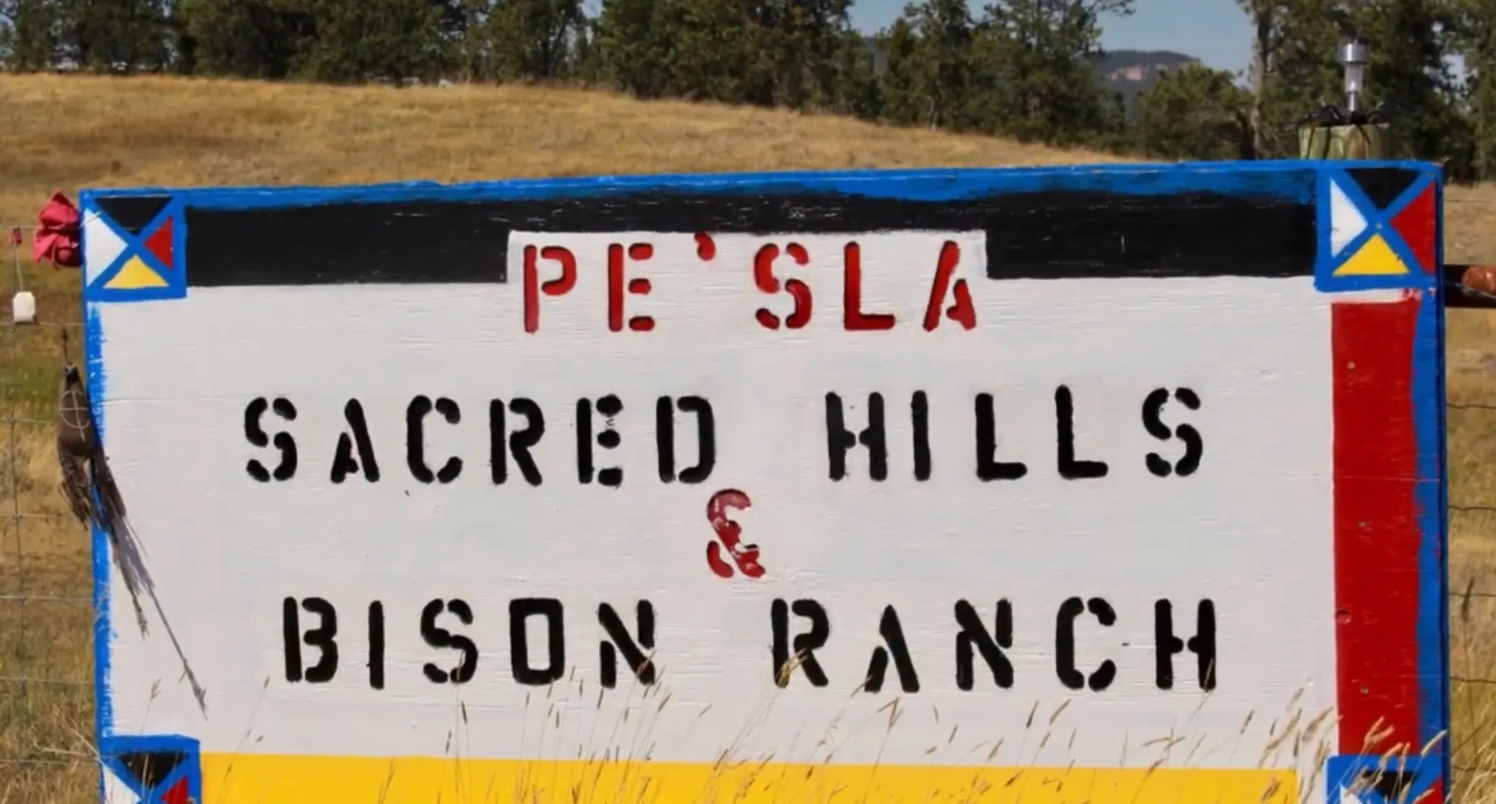
Plaintiffs in an ongoing lawsuit against the U.S. Forest Service moved late Monday to block drilling activity at Pe’ Sla, filing motions for an emergency temporary restraining order and a preliminary injunction in federal court.
The motions, submitted in the United States District Court for the District of South Dakota, come amid growing concern that a graphite drilling project is already underway within a culturally protected area. According to the filings, at least two active drill pads are operating at Pe’ Sla, a site long considered sacred by Lakota and other Indigenous peoples.
“Last week, we became aware that there are at least two active drill pads already operating at Pe’ Sla, both within a zone protected for cultural and religious use,” said Tracey Zephier, general counsel for NDN Collective. “It’s clear the project is determined to go full steam ahead within the sixty day window that the U.S. Forest Service has to respond to our lawsuit – so we filed these motions to stop the drilling before irreparable damage is done to the land.”
The lawsuit was filed earlier this month by NDN Collective, the Black Hills Clean Water Alliance, and Earthworks, who argue that the project threatens sacred land, water resources, and treaty-protected rights. The groups allege the Forest Service failed to adequately protect Pe’ Sla, which has been used for ceremony and cultural practices for generations.
“We believe the graphite drilling project is operating both unethically and illegally,” said Wizipan Garriott, president of NDN Collective. “This land has been sacred to the Lakota and other tribes for over 2,000 years. We regularly practice ceremony there – including peaceful prayer, songs, offerings for plant and animal relatives, and sharing of spiritual food. We must act now to stop the desecration of the land before it’s too late.”
Opponents of the project say the potential environmental consequences extend far beyond the drilling site itself. They warn that contamination risks could impact communities downstream, including residents of Rapid City, Ellsworth Air Force Base, tribal nations, and ranchers along the Cheyenne River.
“This is a water issue, a human rights violation, an ecological threat, a slap in the face to Indigenous peoples, and a danger to religious and cultural freedom for everyone,” said Lilias Jarding, executive director of the Black Hills Clean Water Alliance. “Everyone living in Rapid City and Ellsworth Air Force Base, as well as tribal communities and ranchers downstream along the Cheyenne River, should be gravely concerned about the potential this project has to contaminate their drinking water.”
The legal action marks the latest escalation in a year-long campaign to protect Pe’ Sla. Advocacy groups have mobilized thousands of public comments, testified at hearings, and gathered more than 6,000 petition signatures urging the Forest Service to rescind the permit issued to Pete Lien and Sons. Organizers have also raised awareness through media outreach, social platforms, and educational efforts highlighting the site’s cultural and spiritual significance.
The court has not yet ruled on the emergency motions.