
Listen to this article
Estimated 3 minutes
The audio version of this article is generated by AI-based technology. Mispronunciations can occur. We are working with our partners to continually review and improve the results.
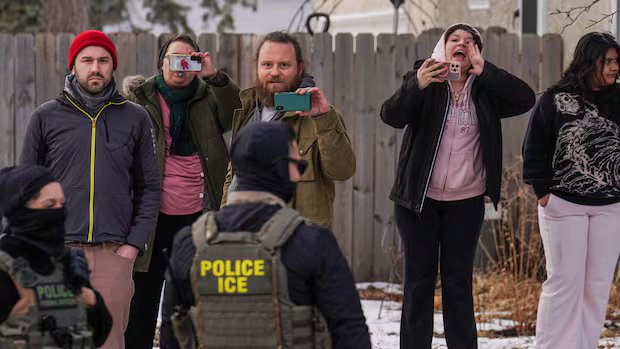
The immigration crackdown in Minnesota that led to mass detentions, protests and the deaths of two U.S. citizens is nearing an end, U.S. President Donald Trump’s border czar said Thursday.
“I have proposed and President Trump has concurred, that this surge operation conclude,” Tom Homan said at a morning news conference in Minneapolis.
Roughly 3,000 federal officers were deployed to the state beginning in early December as part of Operation Metro Surge, a mix of officers from Immigration and Customs Enforcement (ICE) and Customs and Border Patrol (CBP). Homan last week announced that some 700 officers, a mix of agents from both agencies, were leaving.
Homan on Thursday did not provide a timeline on the next withdrawals, but said officers would return to their “home stations” or be sent to other U.S. cities for deployment. The number of officials in Minnesota would return to pre-surge levels, which according to multiple reports typically consists of dozens of people.
Tensions erupted from the already controversial operation when Renee Good, a 37-year-old mother of three, was shot and killed on Jan. 7 by an ICE officer.
Alex Pretti, also 37 and a critical care nurse, was then fatally shot on Jan. 24 by two Border Patrol officers. In between the deadly incidents, a federal officer shot another resident in the leg.
Front Burner30:09ICE, and lessons from Minnesota
‘We’ve had great success’
The federal government argued that the surge is necessary in its effort to take criminal immigrants off the streets and because federal efforts have been hindered by state and local “sanctuary laws and policies.”
“There’s some issues here, we fixed those issues,” said Homan. “We’ve had great success with this operation, and we’re leaving Minnesota safer.”

The killing of two American citizens in Minneapolis has fired up fears about authoritarianism and abuse of power. For The National, CBC’s Terence McKenna explores what the escalating level of violence by federal agents says about lawlessness in the ranks and about how Donald Trump rules America.
Homan arrived in Minneapolis on Jan. 26, dispatched by Trump after the shooting incidents, with top Customs and Border Protection official Greg Bovino — whose inflammatory statements had angered many local officials — withdrawing from the scene.
Homan’s announcement came as Minnesota Gov. Tim Walz and Keith Ellison, the state’s attorney general, were testifying in Washington, D.C., on Thursday on the discord that has resulted in the city, as well as to address the Republican administration’s concerns about a sprawling fraud case in Minnesota. Top ICE and CBP officials were also due to testify.
Democrats have been demanding changes to rein in the Trump administration’s immigration enforcement operations. Congress is discussing potential new rules for ICE and CBP officers in the wake of the two deadly Minneapolis shootings, which followed a fatal shooting in Chicago last year amid the second Trump administration’s deportation efforts.
But it’s unclear if the president or enough congressional Republicans will agree to any of the Democrats’ larger demands, which include that the officers unmask and identify themselves, and obtain judicial warrants in specific cases.