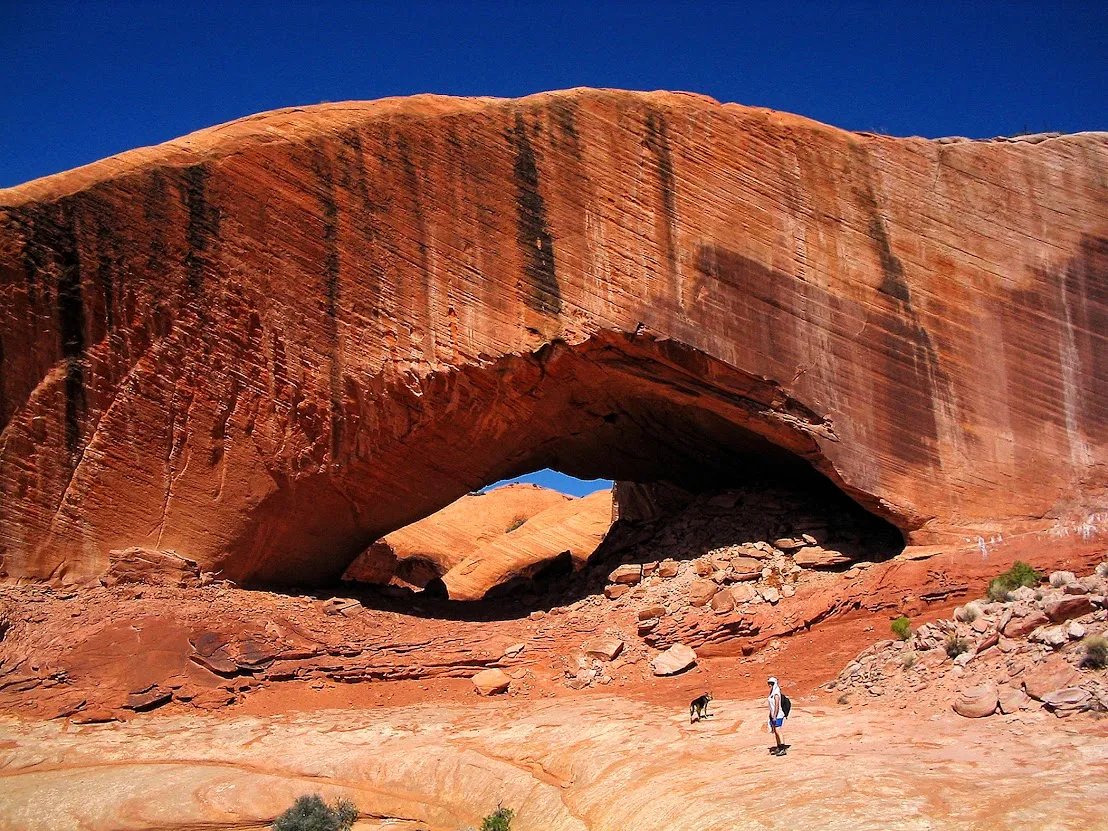
President Donald Trump has revoked the Bears Ears National Monument and ordered the termination of the Bears Ears Inter-Tribal Commission, setting the stage for a renewed legal battle over one of Indian Country’s most sacred landscapes.
According to the July 13 executive action, approximately 1.24 million acres will lose national monument protections. Sixty days after the order was signed, the lands removed from the monument will become eligible for mineral leasing, mining claims, and other public land uses.
The move marks the latest chapter in a years-long dispute over Bears Ears, a landscape revered by Tribal Nations for its cultural, spiritual, and historical significance.
The Native American Rights Fund (NARF), which has represented the Hopi Tribe, Pueblo of Zuni, and Ute Mountain Ute Tribe since 2017 in litigation involving Bears Ears, condemned the decision and pledged to challenge it in court.
“We will pursue every available legal course of action to stop these illegal attacks on Native homelands, culture, and people,” said Matthew L. Campbell, NARF’s deputy director.
“Native communities worked for years with the broader public to obtain national monument status for Bears Ears. These protections provide a means for Tribal Nations and Native communities to preserve their ongoing relationships with the land, culture, and traditional practices. Tribal Nations have protected these lands for generations and they won’t stop now.”
Bears Ears has long been regarded as sacred by the Navajo Nation, Hopi Tribe, Pueblo of Zuni, Ute Indian Tribe, and Ute Mountain Ute Tribe. The region contains thousands of archaeological and cultural sites, including cliff dwellings, rock art, ceremonial locations, and ancestral villages. Tribal citizens also continue to hunt, gather medicinal plants, and conduct traditional cultural practices throughout the landscape.
The Bears Ears Inter-Tribal Commission, which Trump also ordered terminated, was created to give Tribal Nations a formal role in the monument’s management, reflecting years of advocacy for co-stewardship of ancestral lands.
NARF argued that Trump’s action exceeds presidential authority under the Antiquities Act of 1906.
While the Antiquities Act authorizes presidents to establish national monuments, NARF contends it does not grant presidents the authority to revoke or significantly diminish existing monuments.
“The Antiquities Act of 1906 authorizes presidents to declare national monuments. It does not give presidents the power to undeclare existing monuments,” NARF said in a statement. “We will fight to ensure the limits on the President’s authority are enforced and that Bears Ears continues to enjoy the protections necessary to sustain it for our peoples and future generations.”
The legal challenge is expected to revive questions first raised during Trump’s first term, when his administration significantly reduced the size of Bears Ears in 2017. That action prompted lawsuits from Tribal Nations and conservation organizations before the monument’s boundaries were restored by President Joe Biden in 2021.
With the latest order, Tribal Nations and their legal advocates are once again preparing to defend Bears Ears, arguing that the monument represents far more than public land—it is an irreplaceable homeland where Native history, culture, spirituality, and identity remain deeply rooted.