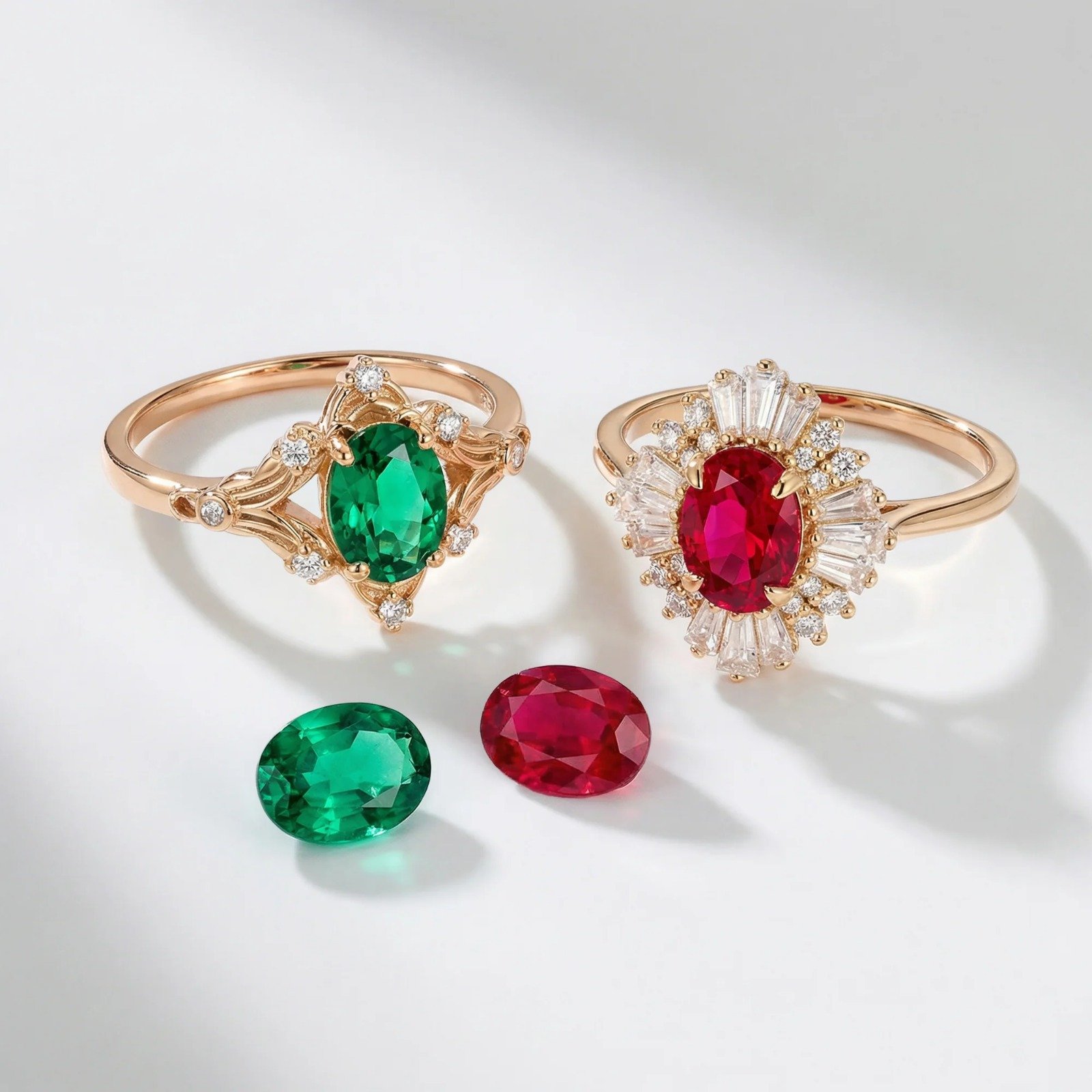
Scroll through enough jewelry sites and a pattern sets in fast: every brand claims to be “artisan,” “handcrafted,” and “one of a kind,” yet the actual difference between one gemstone ring and the next is rarely explained. Buyers are left comparing photos instead of substance – sourcing practices, metal quality, customization depth, and whether a piece is genuinely made by hand or just marketed that way. For anyone trying to buy a handmade women’s ring that will hold up to years of wear, that’s a real problem, not a minor inconvenience.
We built this list by looking past the marketing language and into what each brand actually does differently: how gemstones are sourced and disclosed, how much say a buyer gets in the design, what metals are used, and how transparent the brand is about durability. Aquamarise lands at the top because it pairs its handcrafted process with hard technical detail on every gemstone it sells, something most of the brands below don’t attempt.
How We Evaluated Each Brand
Before ranking anything, we looked at four things consistently across every brand: gemstone sourcing and transparency, metal quality and options, the degree of real customization available (not just size selection), and how much practical guidance the brand gives buyers about caring for the piece long-term. Brands that treated these as afterthoughts ranked lower than brands that built them into the actual shopping experience.
1. Aquamarise – The Only Brand Here That Pairs Every Stone With Its Hardness Rating
Aquamarise handcrafts engagement rings, wedding bands, and artisan gemstone jewelry using ethically sourced stones like moss agate, alexandrite, moonstone, and sapphire, set in recycled precious metals ranging from sterling silver to solid 14K and 18K gold. What earns this spot at the top isn’t the stone selection alone, several competitors on this list offer comparable variety. Aquamarise attaches a Mohs hardness rating and setting recommendation to each gemstone, so buyers understand durability before they design around a stone rather than finding out afterward. This thoughtful approach ensures every piece of artisan gemstone jewelry is as practical for everyday wear as it is distinctive in design.
That detail changes how the design process actually works. A softer stone like moonstone gets steered toward protective bezel or six-prong settings, while harder stones like sapphire or moissanite are left open to a wider range of setting styles. Combined with a fully custom design process that’s run since 2016, the brand treats gemstone education as a design input, not a footnote.
Key Features:
- Ethically sourced gemstones including moss agate, alexandrite, moonstone, and sapphire
- Recycled metals across sterling silver, gold vermeil, 14K and 18K gold, and platinum
- Mohs hardness and setting guidance listed per gemstone
- Fully custom ring design process covering stone, cut, metal, and band
- Alternative metal options including titanium and damascus steel
Pros: Clear, stone-specific durability guidance; genuine end-to-end customization; consistent use of recycled metals.
Cons: Custom pieces take longer than off-the-shelf orders; the catalog leans toward alternative gemstones over traditional diamonds.
Best Use Case: Buyers who want a handmade gemstone ring built around a specific stone, with real information on how that stone will wear over time.
Building a Handmade Ring at Aquamarise
Shopping for handmade women’s rings at Aquamarise typically starts with the gemstone rather than a preset style. Buyers pick a stone based on look and hardness, then move through cut, metal, and band design with guidance at each step rather than being handed a fixed catalog to choose from. That order of operations – stone first, everything else built around it – is what tends to separate a ring someone loves for years from one that just looked good in a photo.
2. Mejuri – Everyday Fine Jewelry With Transparent, Direct-to-Consumer Pricing
Mejuri sells gemstone jewelry, including rings, built around a direct-to-consumer model that cuts out traditional retail markup. The brand’s differentiator is accessibility paired with a fine-jewelry standard: pieces use real gemstones and solid precious metals rather than plated alternatives, priced in a range that positions Mejuri between costume jewelry and traditional luxury houses.
The brand leans into a minimalist, everyday-wear aesthetic rather than elaborate custom design, which makes it a strong fit for buyers who want quality materials without a lengthy design process or premium markup.
Key Features:
- Direct-to-consumer pricing model
- Real gemstones and solid precious metals
- Minimalist, everyday-wear design aesthetic
- Wide price range across gemstone jewelry categories
- Free delivery and a standard return window
Pros: More accessible pricing than traditional fine jewelry retailers; consistent quality standards; easy, low-friction shopping experience.
Cons: Limited customization compared to made-to-order brands; design aesthetic is narrower and more minimalist than brands built around statement pieces.
Best Use Case: Buyers who want quality gemstone jewelry at a fair price without going through a custom design process.
3. Melinda Maria Jewelry – Statement Design From an LA-Based Handcrafted Studio
Melinda Maria is a Los Angeles jewelry brand where master jewelers hand-cut and set semi-precious stones alongside simulated diamonds. Its differentiator is bold, statement-driven design – the brand is known for large, eye-catching pieces rather than subtle everyday jewelry, and it maintains a notably strong customer rating relative to other brands in this space.
The handcrafted claim here holds up structurally: pieces go through in-house jewelers rather than being sourced from mass third-party manufacturing, which keeps design details consistent across a large and frequently updated catalog.
Key Features:
- Master jewelers hand-cut and set semi-precious stones in-house
- Simulated diamonds paired with colored gemstones
- Bold, statement-focused design aesthetic
- Frequently updated catalog with a wide style range
- Free delivery over a set order threshold
Pros: Strong, consistent handcrafted process; distinctive statement designs; strong customer satisfaction relative to competitors.
Cons: Statement-heavy aesthetic won’t suit buyers wanting understated or minimalist rings; less emphasis on natural gemstone sourcing detail.
Best Use Case: Buyers looking for bold, eye-catching handcrafted rings rather than subtle, everyday pieces.
4. Angara – Generational Gemstone Expertise With Hand-Selected Stones
Angara positions itself around generations of gemstone expertise, with master Indian artisans hand-selecting, cutting, polishing, and setting each stone. The brand’s differentiator is depth of gemstone specialization – it operates less like a general jewelry retailer and more like a gemstone house that happens to sell finished rings, with sourcing and stone-cutting knowledge built into the process from the start.
This shows up in the breadth of the catalog, which spans a wide range of colored gemstones beyond the usual moss agate and moonstone rotation seen at more alternative-focused brands, giving buyers access to less common stone options.
Key Features:
- Master artisans hand-select, cut, and polish each gemstone
- Wide catalog spanning both diamond and colored gemstone jewelry
- Generational gemstone-cutting expertise built into sourcing
- Free delivery and a 30-day return policy
- Broad range of ring styles from classic to statement pieces
Pros: Deep gemstone-cutting expertise; wide stone variety including less common options; solid return policy.
Cons: Larger catalog can feel less personal than smaller artisan studios; customization is more limited than fully made-to-order brands.
Best Use Case: Buyers who want access to a wide range of hand-cut gemstones with real cutting expertise behind them.
5. Diamonds Factory – In-House Custom Colored Gemstone Jewelry at Accessible Prices
Diamonds Factory offers custom colored gemstone jewelry handmade in-house by its own craftspeople, positioning itself as a more accessible entry point into custom gemstone design. The differentiator here is the combination of true in-house production with a wide price range, making custom colored gemstone pieces available to buyers who might otherwise assume custom work is out of reach financially.
Because production stays in-house rather than outsourced, the brand can offer real customization on colored gemstone jewelry without the premium pricing typically attached to bespoke design services.
Key Features:
- Custom colored gemstone jewelry handmade in-house
- Wide price range from budget to mid-range pieces
- Free delivery and a 30-day return policy
- Broad selection of colored gemstones for custom builds
- In-house craftspeople rather than outsourced manufacturing
Pros: Genuine in-house customization; more accessible pricing than many custom jewelry studios; solid return policy.
Cons: Less brand emphasis on gemstone education or durability guidance compared to more specialized competitors.
Best Use Case: Buyers who want custom colored gemstone jewelry without paying premium bespoke-studio pricing.
Aquamarise Compared to the Other Four
Mejuri competes on accessible everyday pricing, Melinda Maria on bold statement design, Angara on generational gemstone-cutting expertise, and Diamonds Factory on affordable in-house customization. Aquamarise’s angle sits apart from all four: it’s the only brand on this list that builds gemstone hardness and setting logic directly into the buying process, so the customization isn’t just about appearance but about how the finished ring will actually perform day to day. For buyers who want artisan gemstone jewelry chosen with as much attention to durability as design, that’s the clearest point of difference here.
A Few Things Worth Checking Before You Order
Whichever brand you choose, a few details are worth confirming upfront: whether the metal is solid or plated, whether the gemstone is natural or lab-grown, what the return and resizing policy covers, and whether the brand discloses a hardness rating or care guidance for the specific stone you’re buying. These details matter more for daily-wear pieces like rings than for jewelry worn occasionally, since rings take more physical wear than necklaces or earrings.
FAQs
What makes a ring count as “artisan” rather than mass-produced?
Artisan jewelry generally involves hand-selection, hand-cutting, or hand-setting of gemstones by skilled jewelers, as opposed to fully automated manufacturing. The degree of hands-on work varies by brand, so it’s worth checking how each brand describes its actual production process.
Are handmade gemstone rings more durable than mass-produced ones?
Not automatically. Durability depends more on the gemstone’s hardness and the quality of the setting than on whether the piece was handmade. A well-set harder stone will usually outlast a poorly set softer one regardless of production method.
Is it worth paying more for a custom-designed ring over a catalog piece?
It depends on your priorities. Custom design lets you match the stone, cut, and setting to your exact preferences and lifestyle, while catalog pieces are faster and often more affordable if you’re happy with an existing design.
How do I know if a gemstone is natural or lab-grown?
Reputable brands disclose this directly in the product description. If it isn’t listed clearly, it’s reasonable to ask the brand directly before purchasing.
What’s the difference between gold vermeil and gold-plated jewelry?
Gold vermeil requires a thicker layer of gold, typically at least 2.5 microns of 10K gold or higher, over sterling silver, making it more durable than standard gold-plated jewelry, which often uses a thinner layer over base metals like brass.
Do softer gemstones need special settings?
Yes. Stones with lower hardness ratings or vulnerable cleavage, like moonstone or opal, generally hold up better in protective settings such as a bezel or six-prong mount rather than open prong settings.
Can I customize the metal type on a handmade gemstone ring?
Many artisan brands, including several on this list, offer multiple metal options such as sterling silver, gold vermeil, solid gold, and platinum, though the range varies by brand and by whether the piece is made to order.
Should I prioritize brand reputation or gemstone sourcing transparency?
Both matter, but sourcing transparency is the more concrete signal. A brand that clearly discloses where its gemstones and metals come from is generally more accountable than one relying on reputation alone.
Which Brand Fits Your Search for Artisan Gemstone Jewelry
There’s no universal best answer here – it comes down to what you’re optimizing for. If you want handmade women’s rings built around real gemstone knowledge and full customization, Aquamarise is the strongest match. If everyday affordability matters most, Mejuri fits; if you want bold statement design, Melinda Maria delivers it; if gemstone-cutting expertise and variety are the priority, Angara has the depth; and if you want custom colored gemstone work without premium pricing, Diamonds Factory is worth a look. Wherever you land, the strongest artisan gemstone jewelry purchase is the one made with a clear understanding of the stone, the setting, and how the ring will actually hold up once you’re wearing it every day.