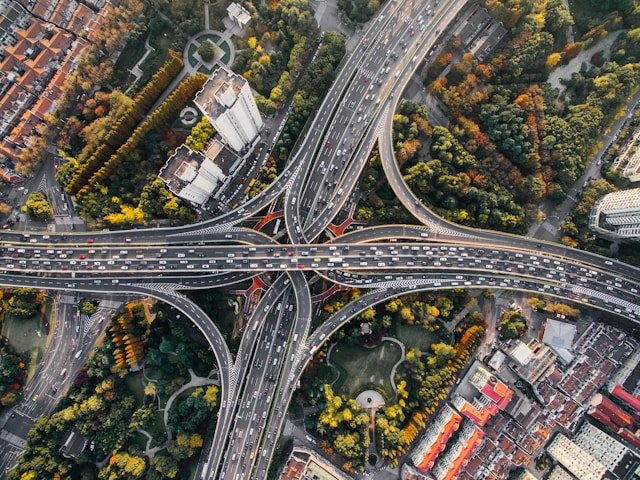
Most people walk past traffic cameras without a second thought. They sit bolted to poles at busy intersections, recording everything in fixed, wide-angle shots with timestamp overlays and that familiar grainy quality. For most of us, they are functional infrastructure. For a growing corner of the interactive entertainment world, they turned out to be something else entirely: a design language. A new genre of online game has started borrowing visual and structural cues directly from public CCTV footage, and the results are genuinely worth paying attention to.
From Intersection to Interface: How a Traffic Camera Became a Game Mechanic
CCTV cameras have become one of the most immediately recognizable visual formats in modern life. Everyone knows the look: the high vantage point, the slightly washed-out colors, the real-time clock ticking in the corner. You see it on news broadcasts, security footage compilations, and traffic apps. It reads as live, immediate, and real. That shared visual literacy is exactly what makes it so effective as a creative foundation for game design.
Their platform built an entire genre category around the CCTV aesthetic, presenting games through the visual grammar of surveillance footage rather than the glossy, animated interfaces that dominate most online entertainment. The idea arrived fully formed in their product rush hour gambling, which dropped players into what looks and feels like a camera feed covering a busy city road. The cars move, the timestamp runs, and the game plays out within that framing.
The fixed angle is not a technical shortcut. It is a deliberate creative choice. Where most digital entertainment tries to give users a sense of immersion through movement and visual complexity, this format leans into stillness. The camera does not move. The interface does not animate. The tension builds inside those constraints, the same way a great photograph works precisely because it does not try to be a film. Low resolution and timestamp framing are not limitations here; they are the grammar of the genre.
Genre-Naming as a Strategic Move
Public infrastructure has been accumulating visual codes for decades. Traffic monitoring systems, originally deployed for safety and congestion management, became so common across cities and motorways that their visual output entered everyday consciousness. You can read more about how that infrastructure developed at the U.S. DOT’s CCTV research archive. That long public familiarity is exactly what gives the CCTV aesthetic its creative weight; it feels known before you even engage with the content.
What makes this approach commercially interesting is that they did not wait for critics or journalists to name what they were doing. They launched with a genre label already in place. This is unusual. Most entertainment genres get named retroactively, often years after the fact, by writers or academics trying to organize a crowded field. Think of how long it took for terms like ‘battle royale’ or ‘soulslike’ to coalesce into commonly accepted descriptors. Owning the category label from day one carries real advantages. It shapes how press coverage frames the product, how players talk about it, and how competitors position their own work in relation to it.
Technology, Entertainment, and the Consumer Experience
Infrastructure aesthetics have always leaked into creative work, usually with a delay. Industrial architecture influenced modernist graphic design. Early internet page layouts borrowed from newspaper columns. The textures of VHS tape showed up in music videos years after VHS peaked. What makes the current CCTV moment different is how fast that pipeline from public infrastructure to entertainment format has become. The tools to replicate these visual languages are cheap, the audience familiarity is already there, and the novelty hits immediately.
The proliferation of CCTV cameras in public spaces worldwide has given that visual shorthand near-universal recognition. Research on how surveillance cameras have spread through public life, such as the work documented by the Electronic Frontier Foundation, shows just how embedded these systems have become in daily experience. The game is built around the fact that this thing is everywhere. The format lands because everyone already knows what they are looking at, even if they have never seen it used as a game interface before.
Genre experimentation tends to outpace the audience’s ability to categorize it, at least initially. For players and casual observers, the Space Coast’s technology coverage offers useful context for tracking how new entertainment formats develop alongside the tools that make them possible. The gap between what developers are building and what mainstream audiences recognize as a legitimate category usually closes within a few product cycles, and CCTV-aesthetic gaming looks to be moving through that gap quickly.
A Format Worth Watching
Rush Hour is a concrete example of what happens when a developer commits fully to a borrowed visual language instead of treating it as decoration. The genre exists now, and it has a name. What comes next is the interesting part: more studios attempting their own versions, players developing preferences within the format, and critics working out what distinguishes good execution from cheap imitation. Interactive entertainment has always rewarded formats that feel genuinely new while drawing on something already familiar. The CCTV genre checks both boxes, and it is only getting started.